
By Rabbi Josh Wander
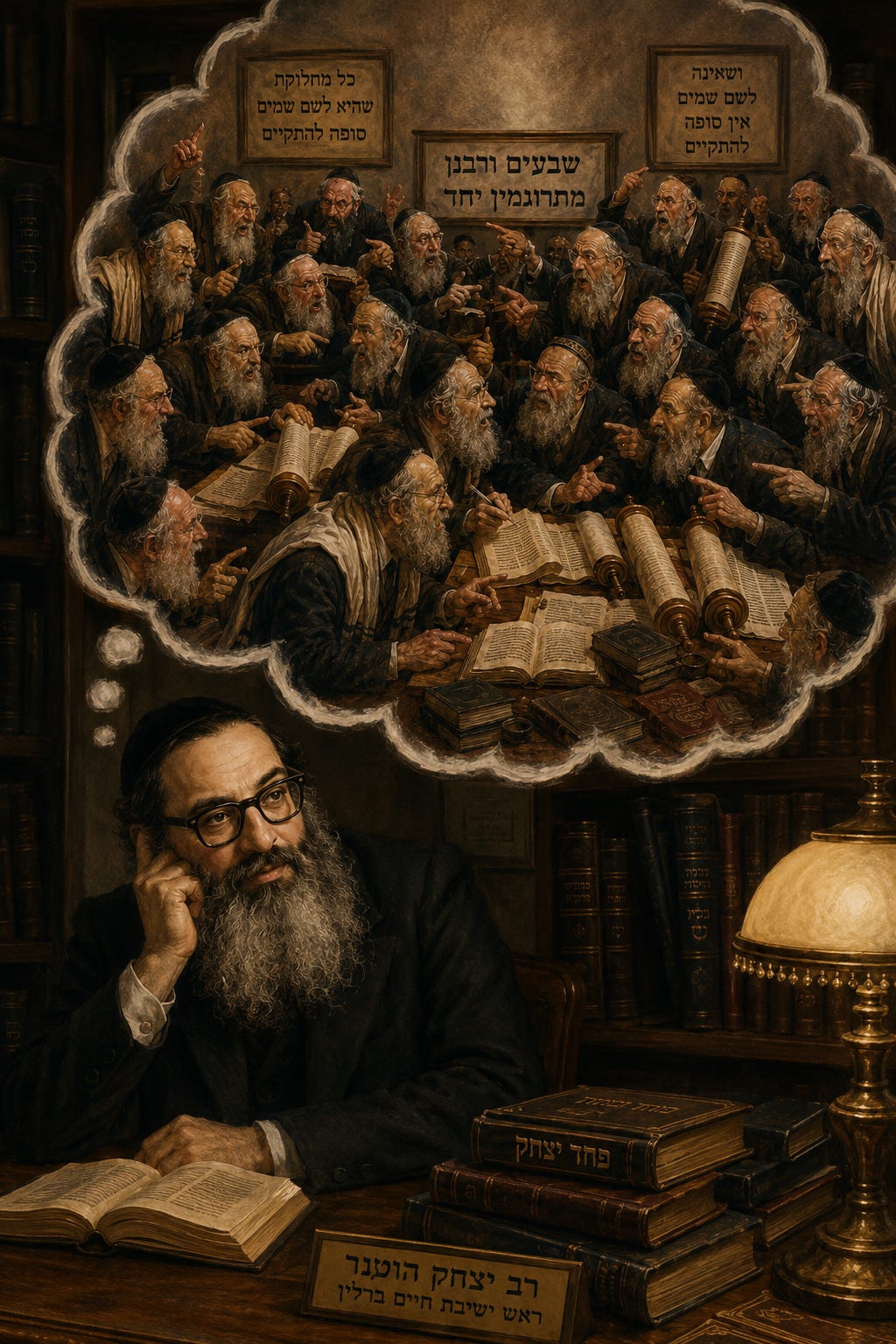
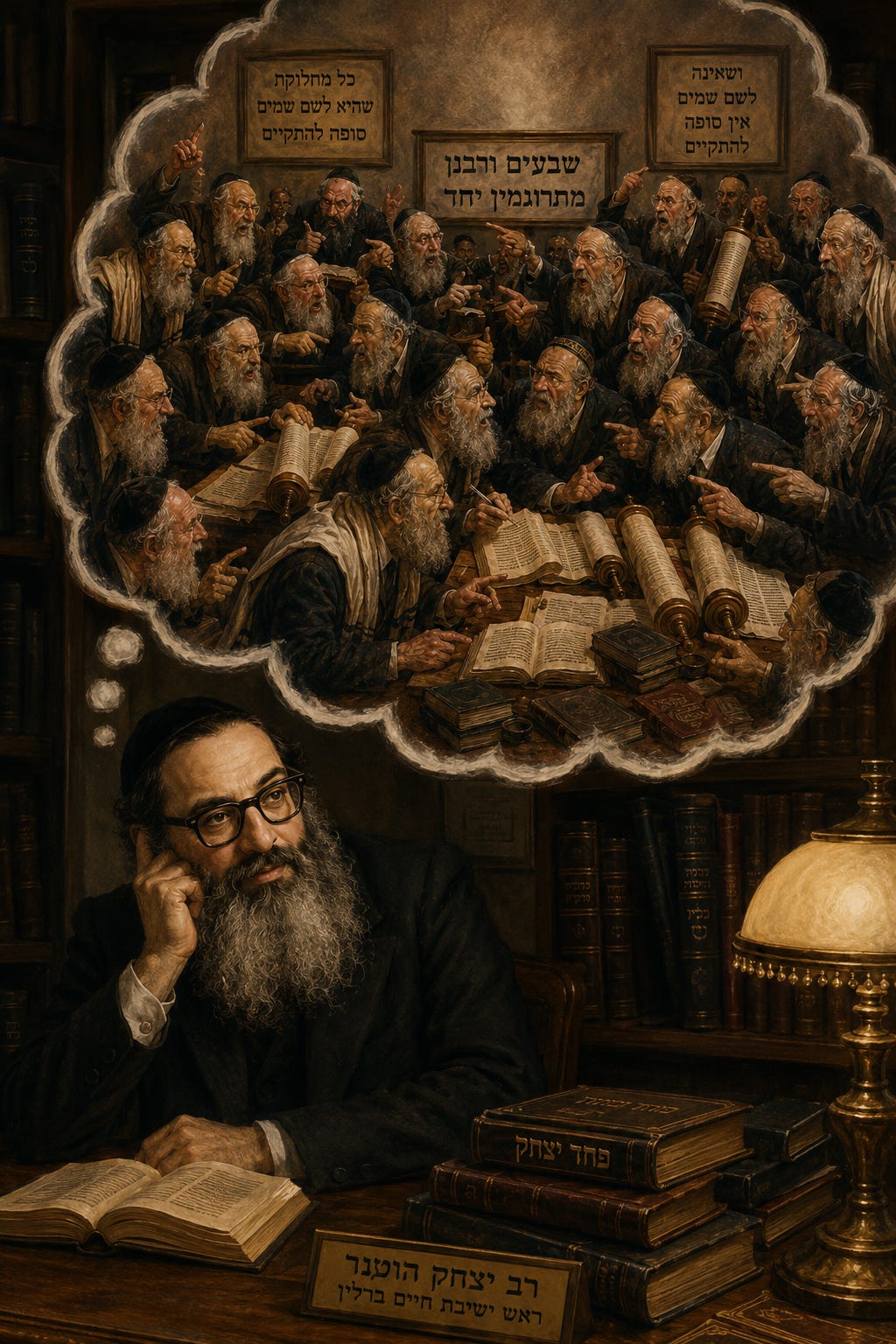
The great Rosh Yeshiva of Rabbi Yitzchak Hutner once commented on one of the most famous rabbinic stories in Jewish history: the translation of the Torah into Greek by the seventy elders, known as the Septuagint. Tradition tells us that seventy rabbis were placed into separate rooms and ordered to translate the Torah independently. Miraculously, they all emerged with the exact same translation, including identical non-literal changes rooted in the Oral Torah. Most people focus on the miracle itself. But Rav Hutner quipped that this was not the real miracle. “If they had all been put in the same room and still agreed,” he said, “that would have been a miracle!” The line is humorous, but beneath the humor lies something profound about Judaism itself. Disagreement is not a flaw in Torah. It is the engine of Torah. The entire Talmud is built upon argument, challenge, contradiction, and debate. Our greatest sages did not run from controversy; they refined truth through it. As Pirkei Avot teaches, “Any controversy that is for the sake of Heaven will endure.” Machloket itself is not the enemy. Falsehood is the enemy. Ego is the enemy. Fear is the enemy. But controversy pursued לשם שמים is not only acceptable, it is holy.
So why does it feel as though so many rabbis today are terrified of controversy? Why are so many willing to speak boldly about minor ritual questions, yet become silent when confronted with the great historic questions of our generation? It is easy to pasken whether a chicken is kosher or whether a pot became treif. Important? Certainly. But we are living through one of the most extraordinary eras in all of Jewish history. The Jewish people have returned to their land. Hebrew has been revived. Jewish sovereignty has been restored. A Jewish army exists once again after two thousand years. Jerusalem has been reunified. The Temple Mount is in Jewish hands. Entire exiles have returned from the four corners of the earth. If these are not the questions Torah leadership should be grappling with, then what exactly are rabbis for?
And yet, the closer an issue gets to Geula, the quieter many become. Anything that risks criticism, backlash, institutional discomfort, or communal controversy is often ignored altogether. There is always a convenient escape hatch. “These are matters for Eliyahu HaNavi and Moshiach,” we are told. “We must wait.” So we continue chanting “We Want Moshiach Now” while carefully ensuring that nothing whatsoever is actually done to bring the process forward. We sing “Next Year in Jerusalem” while treating practical steps toward redemption as dangerous extremism. We pray daily for the rebuilding of the Beit HaMikdash while recoiling from any serious discussion about what preparation for that reality would even look like.
Many rabbis defend this hesitation by framing it as a chumra, a righteous stringency designed to protect the Jewish people from error or misconduct. But perhaps the opposite is true. Perhaps avoiding the monumental responsibilities of Geula is actually the greatest kula imaginable. After all, there is far less risk in doing nothing than in stepping forward and taking responsibility. It is easy to remain “frum” when no sacrifice is demanded, when no criticism is endured, when no difficult national questions must be confronted. Maybe the real chumra is having the courage to engage with the challenges of redemption despite the personal and communal cost. Perhaps hiding behind passivity is not spiritual caution at all, but a convenient leniency masquerading as piety.
But can anyone honestly claim that redemption itself was ever supposed to be comfortable? Was the return to Zion not controversial? Was the reestablishment of Jewish sovereignty not controversial? Was the creation of a Jewish government and army after two thousand years not controversial? Of course it was. Every major step in Jewish history was controversial while it was unfolding. The only difference is that after history settles, people retroactively pretend it was obvious all along.
In truth, some of the greatest Torah giants in Jewish history were themselves attacked, ostracized, and condemned by their contemporaries. Maimonides faced fierce opposition, and parts of his writings were publicly burned by fellow Jews who viewed his ideas as dangerous innovations. Moshe Chaim Luzzatto was hounded relentlessly, his writings suppressed, and his brilliance feared by rabbinic establishments uncomfortable with where his teachings might lead. History has a way of vindicating those willing to endure humiliation for the sake of truth, while exposing the smallness of those who fought to preserve the status quo. The uncomfortable reality is that controversy has often been the price paid by visionary Torah leadership.
This past week, three major rabbis, genuine talmidei chachamim of significant stature, chose to publicly support proactive projects connected to the Geula process. These were not reckless people. These were serious Torah scholars attempting to engage honestly with the realities unfolding before our eyes. Almost immediately, the pressure campaign began. One reportedly received a direct phone call from the Chief Rabbi of Israel demanding that he step down. Let that sink in…the Chief Rabbi intervened to stop another prominent rabbi from being involved in Geula! The accusations came quickly and predictably. “Who do they think they are?” “We have no mesorah for this.” “This was never done before.” “They are undermining the rabbinic system.”
And sadly, all three ultimately folded under the pressure. I do not judge them. Some are elderly men who simply did not possess the strength to wage war against an entrenched institutional culture that has built into itself an invisible glass ceiling called “Geula.” The moment a rabbi gets too close to practical redemption, the system activates to pull him back down. Stay in your lane. Discuss abstract theology. Give inspiring speeches. Speak about Moshiach as an idea. But do not touch the actual mechanisms of redemption unfolding in front of us. Do not challenge the exile mindset too directly. Do not force the Jewish world to confront the possibility that Geula may require responsibility rather than passive anticipation.
But this cannot continue forever. At some point, rabbis must decide whether they are leaders or caretakers of stagnation. Klal Yisrael does not need more spokesmen for paralysis. We need rabbinic leadership courageous enough to confront the great questions of our generation honestly, even at personal cost. The fear of controversy has become one of the greatest obstacles to progress. Ironically, the very Torah world built upon passionate debate now often treats disagreement itself as forbidden.
The real tragedy is not that controversy exists. The tragedy is that so many fear it more than they fear avoiding the truth. Geula will not come through slogans alone. It will come when enough Jews — rabbis and laymen alike — stop waiting for others to act first. It will come when enough people care more about truth than about reputation, more about responsibility than comfort, more about redemption than institutional approval. And perhaps most importantly, it will come when the real rabbis finally stand up.