
By Rabbi Josh Wander
There is a quiet contradiction that sits at the center of modern life, one that most people feel but few are willing to confront. On the surface, everything continues as normal. People wake up, go to work, deal with their problems, chase distractions, raise families, complain, celebrate, and repeat. But beneath that routine sits an unspoken awareness that something far larger is unfolding. The tension between those two realities—what we see and what we sense—is the cognitive dissonance that defines our generation.
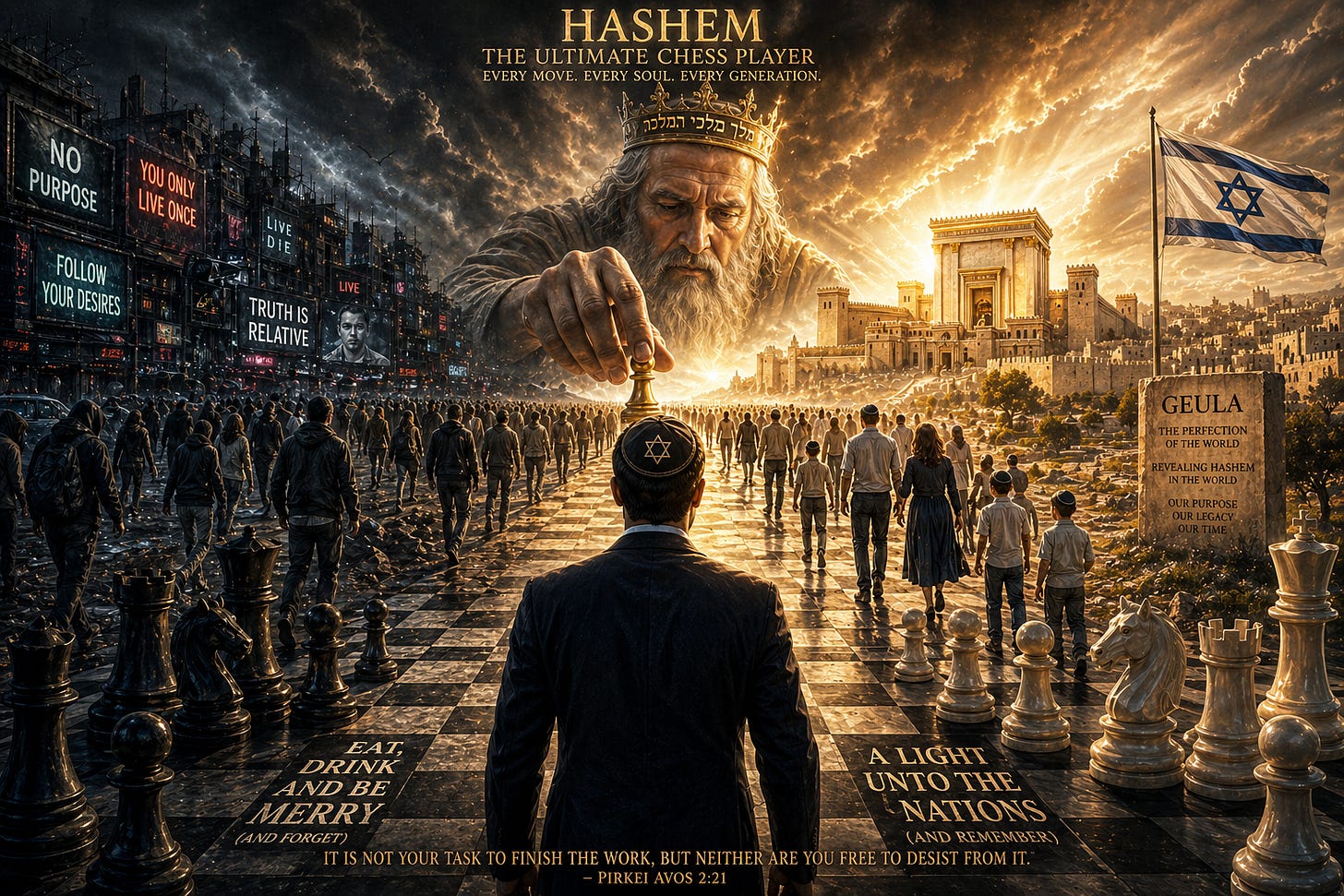
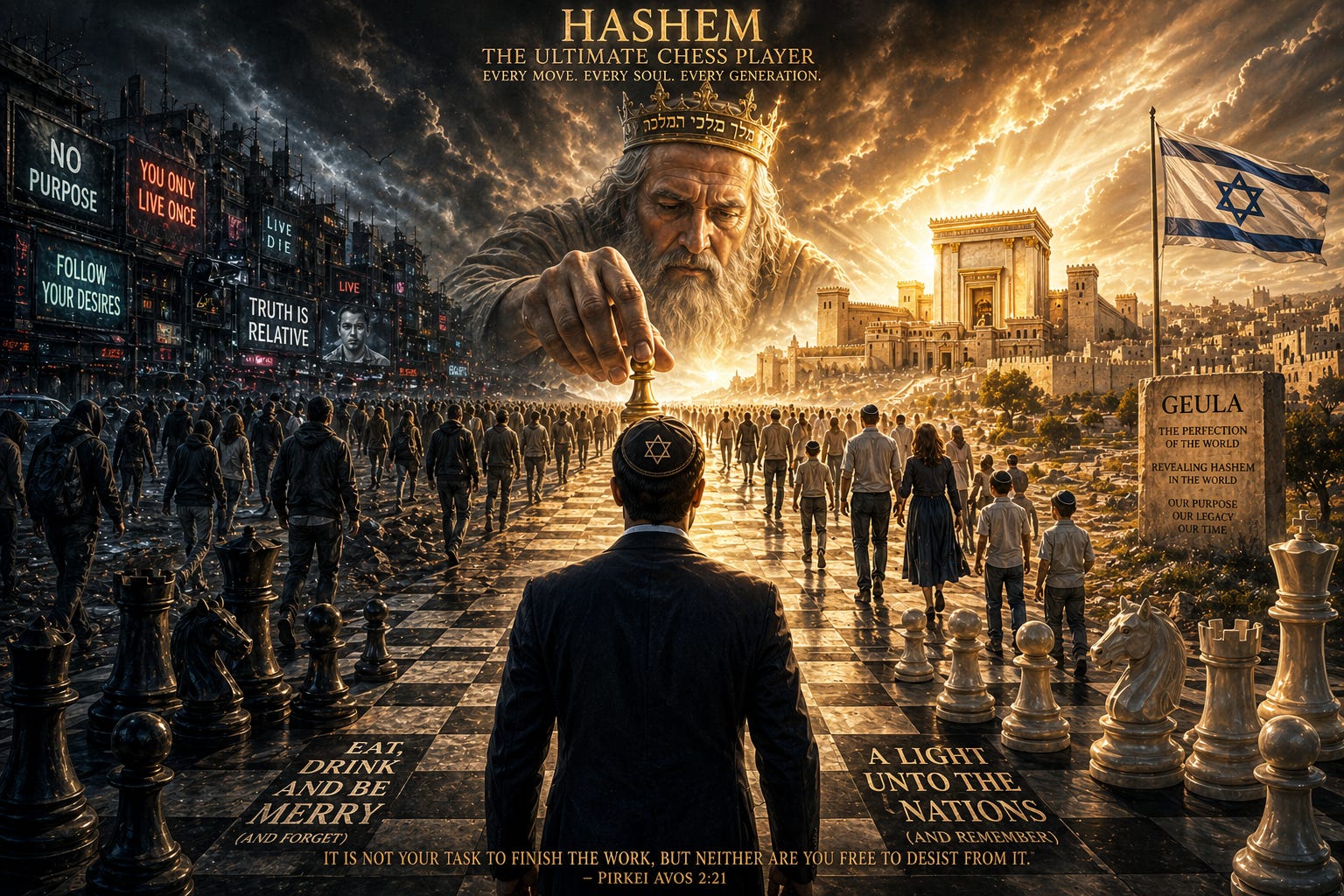
We speak about Geula as if it is some external event, something that will arrive one day like a storm on the horizon, dramatic and undeniable. But that framing is not just simplistic—it is an escape. Geula is not merely something that happens to the world; it is something that happens through it, through us. It is a transformation already in motion, a shift in consciousness, in clarity, in purpose. The stage is being set, the pieces are moving, and yet most people continue to play minor roles in a story in which they were meant to be central.
It is the ultimate irony. Like The Truman Show, we are surrounded by a reality carefully orchestrated, layered with meaning and direction, but we walk through it as if it were random, as if our choices carried no weight beyond the immediate moment. Truman’s tragedy was not that he was being watched; it was that he did not realize he was the protagonist. And so he lived small, confined within the limits he assumed were real. That is not fiction. That is the human condition.
Life trains us into this blindness. The daily grind dulls the senses. The constant cycle of responsibility and distraction convinces a person that survival is the goal, that getting through the week is an achievement. We become conditioned to believe that greatness belongs to others, to history books, to biblical figures, but not to us. And so we settle, not because we lack the capacity to rise, but because we no longer recognize that we are meant to.
At the same time, the broader world is quietly signaling despair. Birth rates collapse across entire civilizations. Cultures that once built empires no longer believe in their own future. The message is rarely spoken outright, but it is deeply felt: humanity has no direction, no grand purpose, just existence to be consumed. Eat, drink, and be merry, not as a celebration, but as a surrender.
And that mindset is not neutral. It actively distances the world from its purpose. Because Geula, by definition, is the perfection of the world, the revelation of meaning, the alignment between creation and its Creator. A world that abandons purpose cannot move toward redemption; it can only drift further from it.
This is where the role of the Jewish people becomes unavoidable. “A light unto the nations” is not a slogan; it is a responsibility. It means demonstrating, not just teaching, that life has direction, that existence is not random, that revealing Hashem in the world is not only a theological concept but the key to human fulfillment. The tragedy is not that the nations have lost their way; the tragedy is that those entrusted to illuminate the path often dim their own light.
Instead of leading, many choose stagnation. Instead of elevating the world, some become indistinguishable from it, and others, consciously or not, pull it further into confusion. The same spiritual capacity that could clarify reality is redirected into comfort, distraction, or even opposition to the very purpose it was meant to serve.
Every generation faces the same test, but ours has stripped away the excuses. The idea that redemption will happen “one day,” in some distant, undefined future, has become a convenient way to avoid responsibility. It allows a person to live passively while speaking about destiny. But the truth is far less comfortable. Each generation is expected to bring Geula in its own time, not theoretically, not symbolically, but practically.
The can is not meant to be kicked down the road. It is meant to be picked up. We are living in a moment of unprecedented potential, a convergence of history, return, technology, and awareness that previous generations could not have imagined, and yet it is largely unrecognized, precisely because it does not fit the narrow expectations people have constructed. They are waiting for something that will force them to believe, while ignoring what is already demanding a response.
That is the dissonance: knowing, on some level, that this moment matters, and choosing to live as if it doesn’t. Until that tension is resolved, nothing truly changes. But the moment a person recognizes their role, not as an observer but as an active participant, the entire picture shifts. The same life, the same challenges, the same world, but now with purpose, with direction, with urgency. Geula is not waiting for us; it is waiting on us.