
By Rabbi Josh Wander
There’s a scene that repeats itself every time tension spikes.
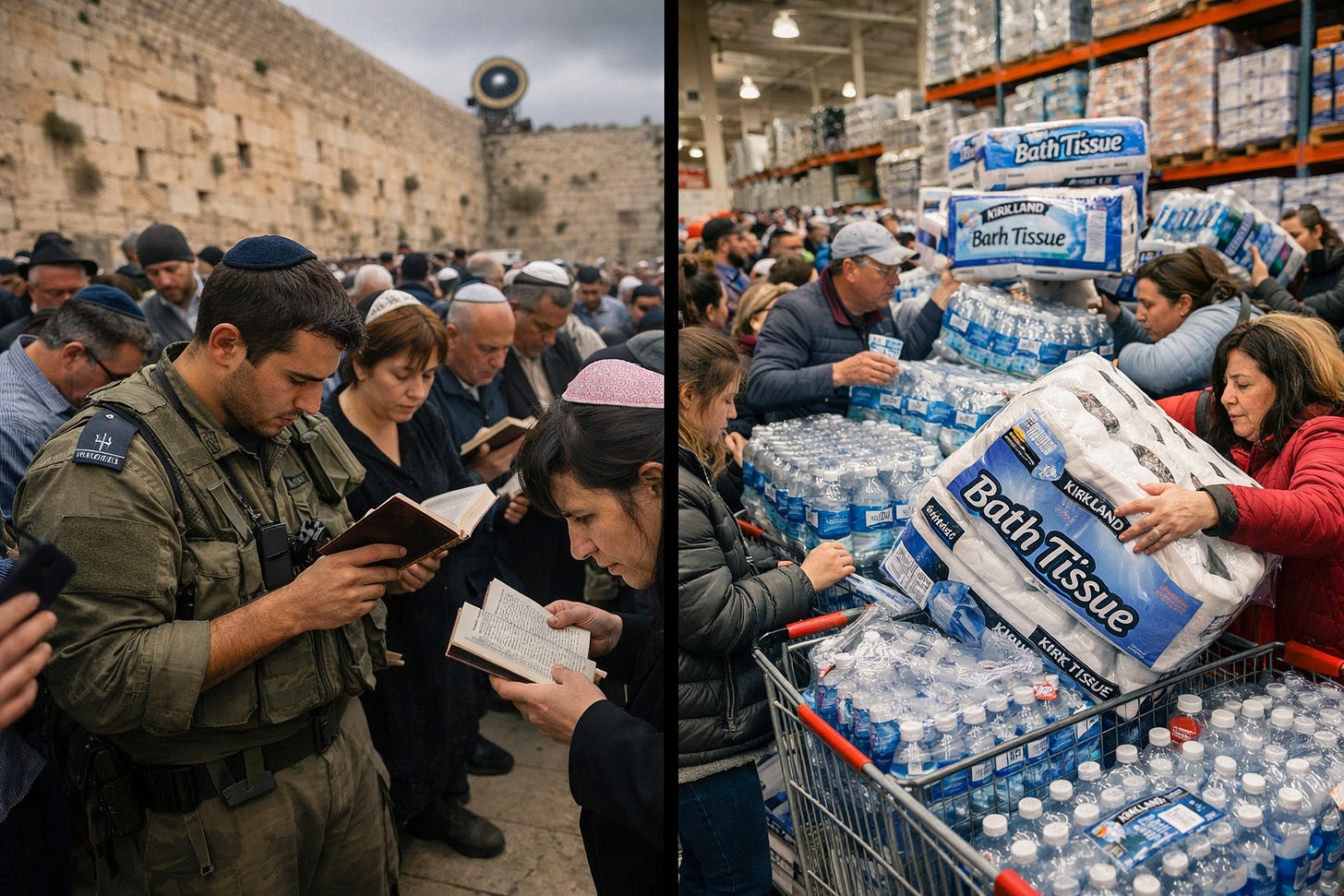
In Eretz Yisrael, sirens wail. WhatsApp groups light up — not with shopping lists, but with Tehillim chapters. Soldiers are named. Hospitals are named. Entire neighborhoods gather, sometimes physically, sometimes digitally, and you can feel the reflex: turn upward.
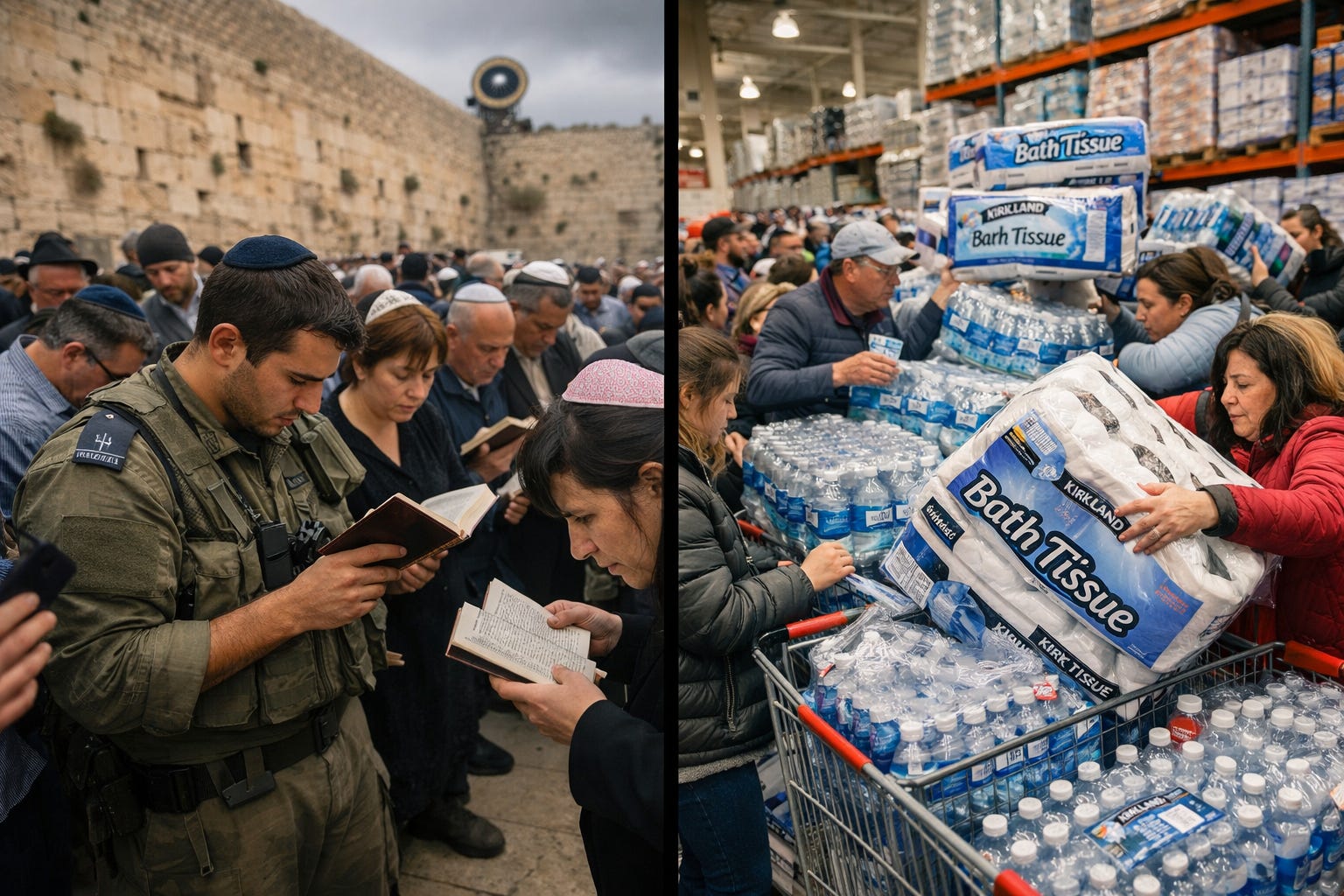
In exile, tension spikes and the reflex is different. Parking lots fill. Shelves empty. Toilet paper disappears. Bottled water becomes currency. The ritual is not Tehillim — it’s Costco.
That contrast is not about mocking anyone’s preparedness. Buying water isn’t wrong. Having supplies isn’t foolish. Physical hishtadlus is real and necessary everywhere.
But reflex reveals priority.
When danger feels existential in Eretz Yisrael, even secular Israelis instinctively reach for something transcendent. The land itself carries memory. Jews here know — consciously or not — that their story is covenantal. War isn’t just geopolitical. It’s part of a larger unfolding. So the first movement is spiritual alignment.
In exile, the reflex often exposes a different psychological posture. Stability has been assumed for generations. Jewish identity has been layered over citizenship and comfort. When cracks appear in the system, the instinct is to secure the system — stock supplies, hedge assets, secure material control.
It feels rational. It feels responsible. But it can also be revealing.
If hishtadlus obligates us in spiritual, emotional, and physical realms — and it does — then the order matters. Spiritual first. Emotional second. Physical third.
When the order is inverted, anxiety drives the bus.
Buying water before opening Tehillim suggests that we believe the warehouse is more decisive than the Ribbono Shel Olam. That our security flows primarily from supply chains rather than from Divine orchestration. That Costco is a stronger refuge than covenant.
That’s not preparation. That’s misplaced emphasis.
The Jew in Eretz Yisrael, even if not fully observant, lives inside a reality where Hashem’s role in history feels closer. Rockets fall. Miracles happen. Soldiers survive against odds. The feedback loop between vulnerability and faith is immediate. The spiritual reflex strengthens.
In exile, the illusion of permanence dulls that reflex. The surrounding society feels solid — until it doesn’t. When instability emerges, confusion replaces clarity. Emotional turbulence spikes. People scramble materially because the deeper framework was never reinforced.
This is not about romanticizing poverty of preparation or condemning diaspora Jews. It is about honesty.
Physical preparation is necessary everywhere. No one is advocating recklessness. But if the first instinct during war is aisle seven instead of Tehillim 20, something in the hierarchy is inverted.
Hashem is running the show — in Jerusalem and in New York. In Tel Aviv and in Toronto. The difference is that in Eretz Yisrael, that awareness is harder to ignore. The land itself whispers it.
Exile allows the whisper to fade.
War has a way of amplifying whispers into alarms.
The question isn’t whether you should have bottled water. Of course you should.
The question is what you reach for first when the siren sounds.
That reflex tells you where your real security lies.