
By Rabbi Josh Wander
War talk is in the air again. Not rumors. Not theater. Real missiles. Real alliances. Real calculations. The Islamic Republic of Iran has spent decades building proxies on Israel’s borders, racing toward nuclear capability, and declaring its intentions without subtlety. Israel has spent decades preparing for the moment when containment fails. History compresses long threats into short, violent chapters.
But Jews do not read history as random noise. We read it as pattern.
The Midrash in Yalkut Shimoni describes a year when “מלך פרס מתגרה במלך ערבי” — the king of Persia provokes the king of Arabia. Persia devastates the world. Nations tremble like a woman in labor. And Israel cries out, “להיכן נבוא ונלך?” Where shall we go?
And the answer is not logistical. It is theological: “בני אל תיראו… הגיע זמן גאולתכם.” My children, do not fear. The time of your redemption has arrived.
Look at the calendar. Today is Rosh Chodesh Adar. The month where “משנכנס אדר מרבים בשמחה.” Joy increases not because circumstances are calm, but because reversals are woven into Jewish time. In two weeks comes Purim — ונהפוך הוא. A Persian empire once sought annihilation. The decree flipped. The gallows reversed. Power inverted.
Soon after comes Pesach — the collapse of Egypt, the archetype of empire. The birth of a nation. The splitting of a sea. The Torah hints: אחרית כראשית. The end mirrors the beginning.
Now widen the lens.
Chazal identify Edom with Rome — and in later Jewish thought, Rome’s civilizational heirs. Many have seen in the modern West, particularly the United States, elements of that Edomite inheritance: global reach, military dominance, cultural hegemony. Whether that identification is literal or symbolic, Tanach’s pattern is clear — the dominant empire of the age does not remain peripheral at the climax of history.
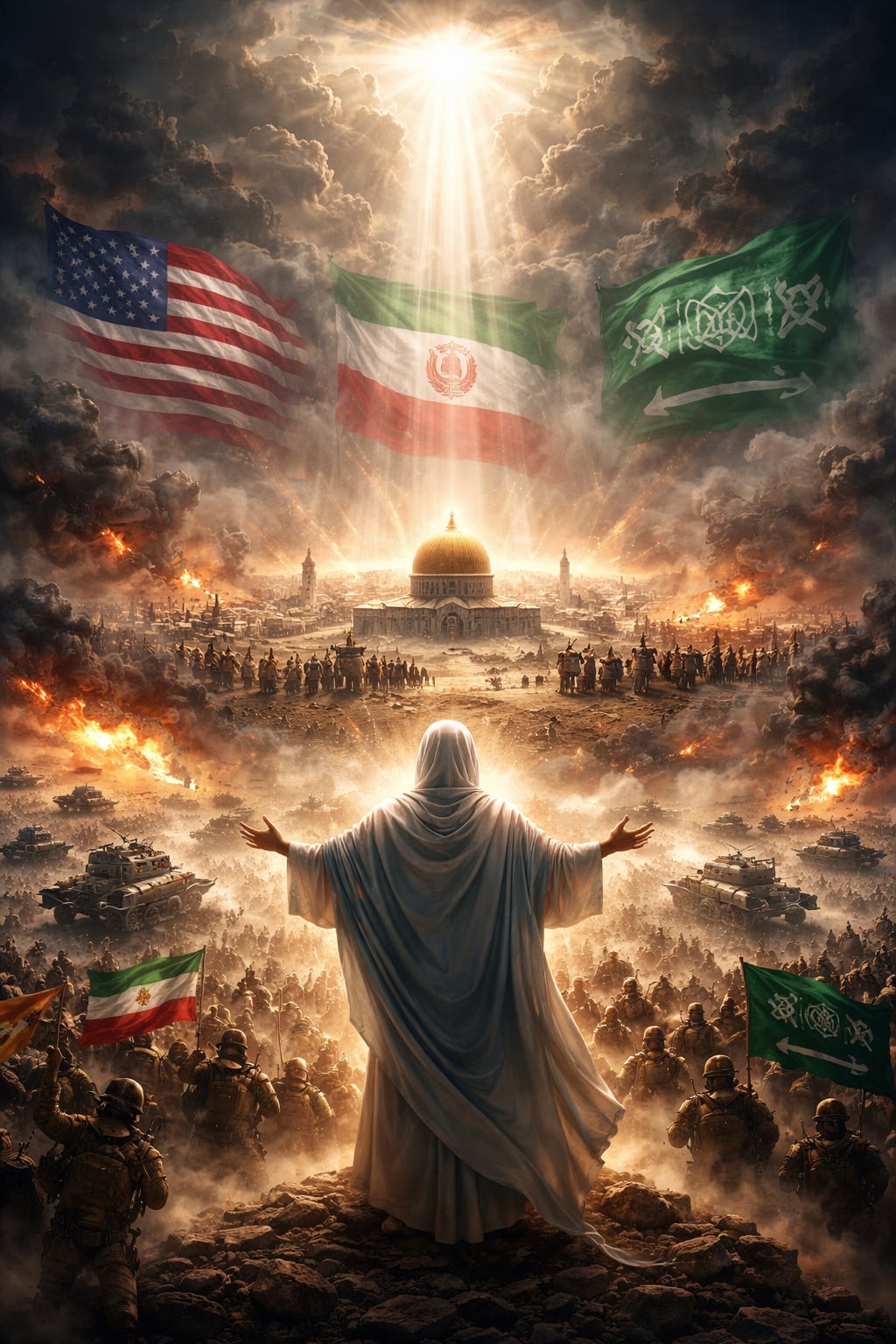
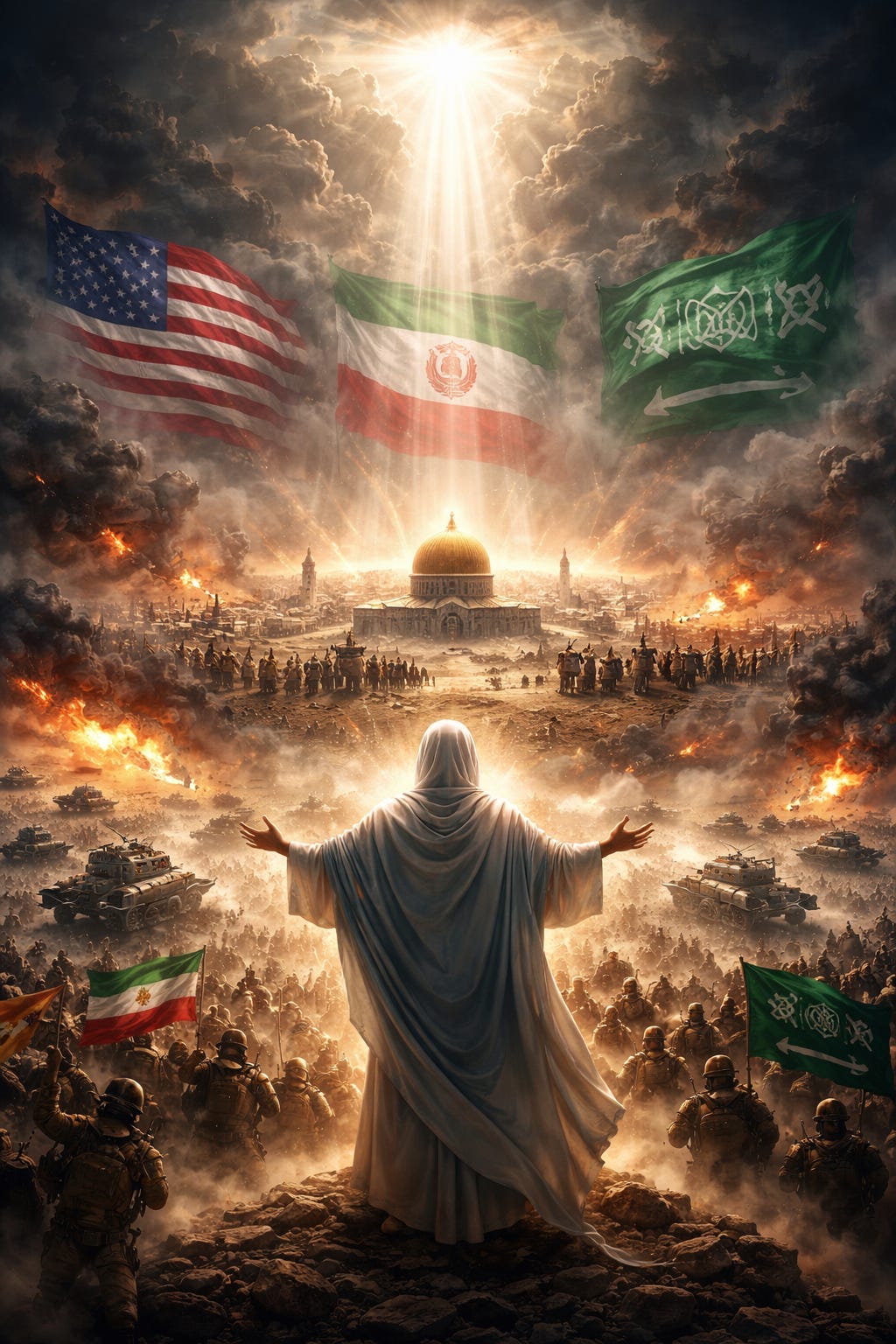
Zechariah declares: “ואספתי את כל הגוים אל ירושלים למלחמה.” I will gather all the nations against Jerusalem for war. Not a regional skirmish. A convergence.
And what of Yishmael?
In classical Jewish thought, Yishmael represents more than an individual. He represents a civilization. A spiritual archetype rooted in Avraham yet distinct from Yitzchak. Much of the Muslim world has historically been identified in rabbinic literature with Yishmael — fierce faith, vast territory, deep historical memory, and a complicated, often adversarial relationship with Israel.
So look at the board.
Persia — Iran — agitating.
Arab regimes navigating survival and alliances.
The broader Muslim world — Yishmael — wrestling between pragmatism and ideology.
The Western superpower — Edom — powerful, conflicted, internally polarized.
These are not random actors. They are characters we have met before in the text.
This does not mean every headline is a fulfilled prophecy. It means the architecture of the end-of-days scenarios described by Chazal is recognizable. Persia. Yishmael. Edom. Jerusalem at the center. Nations gathering.
Speculation is not prophecy. It is a working framework. But the convergence is striking.
And here is the uncomfortable question.
Is anyone ready for this?
We live as if history is linear and stable. We plan decades ahead assuming the geopolitical order will remain recognizable. We treat exile as permanent housing rather than temporary lodging. Normalcy bias tells us tomorrow will look like yesterday.
History repeatedly shatters that illusion.
For those already home in Israel, upheaval will be frightening. Rockets, mobilization, uncertainty — theological stress tests are not abstract. Faith matures under pressure.
For those still in exile, it may be more destabilizing. Because exile feels stable — until it doesn’t. Borders can close. Drafts can return. Economies can lurch. Alliances can invert. And one morning you wake up and realize the window you assumed would remain open has narrowed. That history accelerated while you were comfortable.
Purim teaches ונהפוך הוא — reversals come suddenly. Pesach teaches that empires drown. Zechariah teaches that nations converge upon Jerusalem. The Midrash teaches that Israel will tremble — and that God will say, “אל תיראו.”
“קומי אורי כי בא אורך.” Rise, for your light has come.
Redemption is not a gentle transition. It is seismic. Labor pains are not poetic when they are happening. They are contractions in service of birth.
If Persia, Yishmael, and Edom are all moving into sharper alignment around Jerusalem, then we are not living in ordinary time. We are living in compressed time.
This is unfolding faster than most imagined.
Seatbelts are not optional in turbulence.
History is accelerating — and Jerusalem is at the center of the story.