
By Rabbi Josh Wander
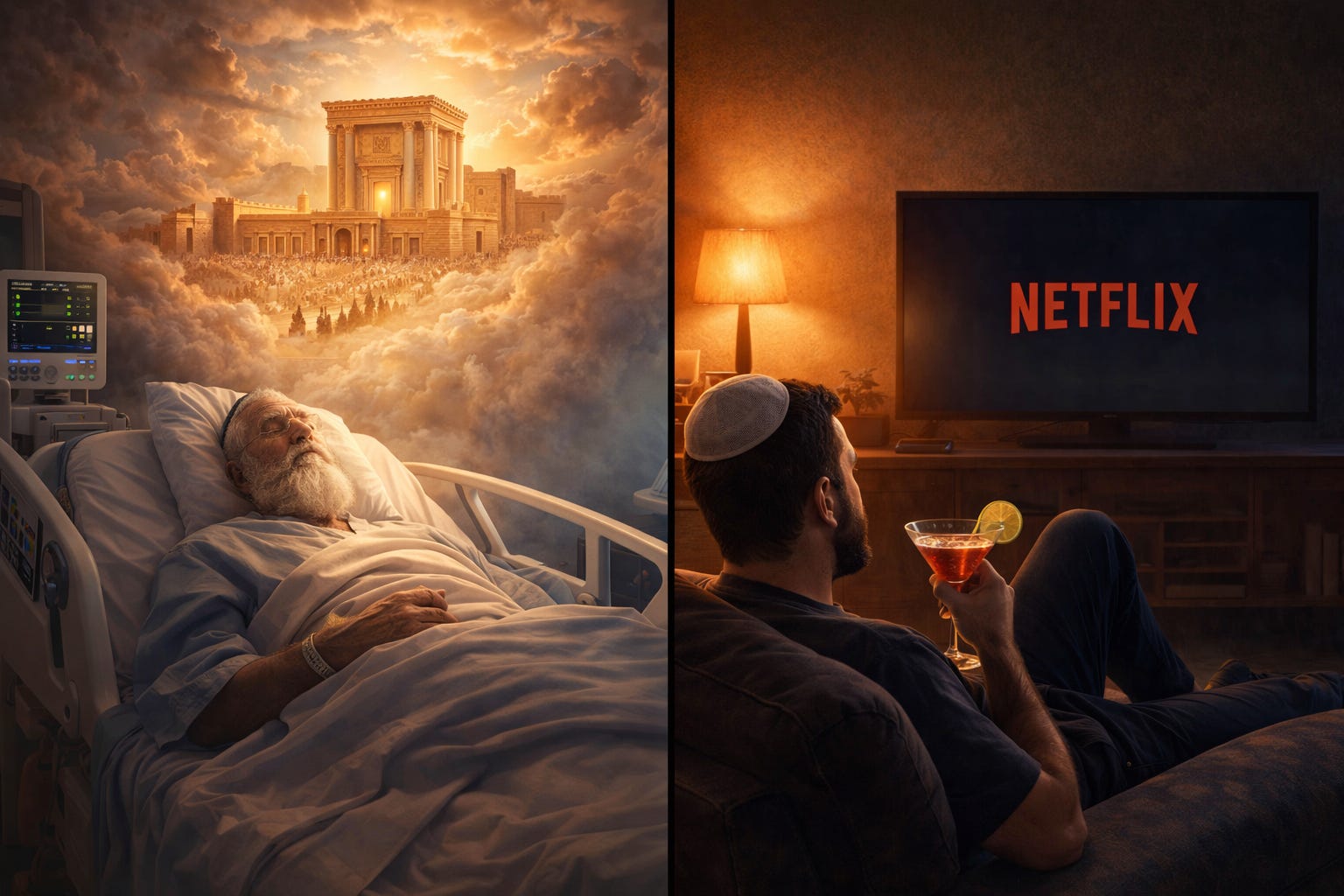
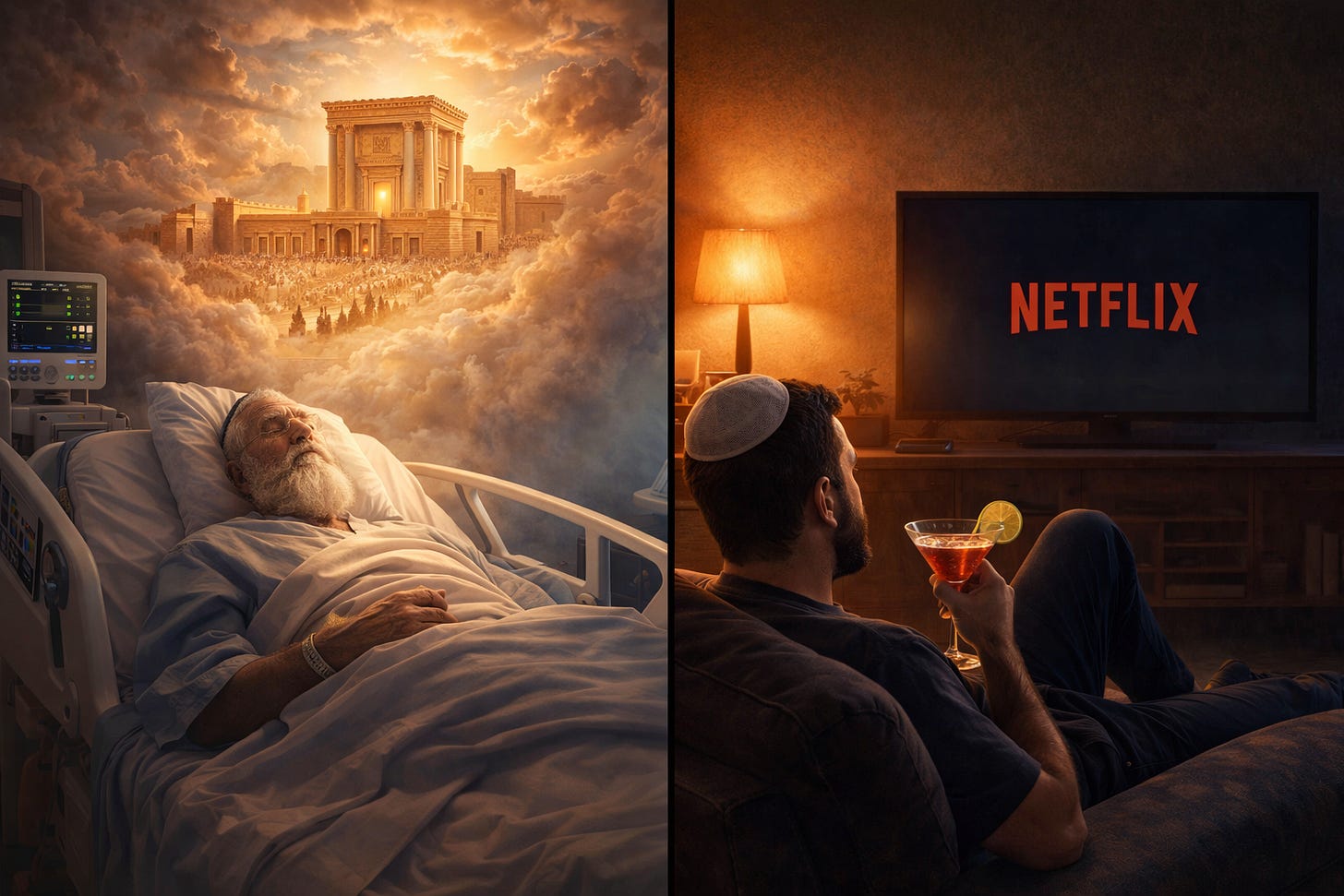
What would you do if you knew—without a doubt—that this was your last day on earth? Not as a thought experiment, not as something abstract, but with complete certainty that within hours you would be standing before the Ribbono Shel Olam. Would you spend that time distracting yourself, indulging in whatever fleeting pleasures you could still grasp, trying to squeeze one last drop out of a world that is already slipping away? Or would something inside you shift, something far more honest and far more real, forcing you to confront what actually matters when everything else is stripped away?
A person who knows his end is imminent does not waste time on nonsense. The trivial disappears almost instantly. The arguments, the distractions, the endless noise that fills our days—none of it survives the weight of that realization. Instead, a person becomes focused with a kind of clarity that is almost uncomfortable. He thinks about the relationships he neglected, the words he should have said, the forgiveness he should have asked for. He thinks about his עומד לפני ה׳ moment, not as an idea, but as a reality that is about to unfold. What he wants in that moment is not entertainment, but meaning. Not escape, but alignment.
That person would do teshuva, not as a ritual or a seasonal obligation, but as an urgent return to truth. He would reach for mitzvot with a desperation that only comes when one understands their real value. Every mitzvah becomes eternal currency, every moment an opportunity that will never return. What seemed small yesterday becomes everything today. What was once easy to postpone suddenly becomes unbearable to delay.
And yet, the only reason we do not live like that is because we assume there will always be another day. Chazal dismantle that illusion in Pirkei Avot when they tell us to do teshuva one day before we die. Since no one knows when that day will come, the only logical conclusion is that every day must be lived with that same urgency. Not out of fear, but out of awareness of what is truly at stake.
There is a well-known account of the Vilna Gaon on his deathbed. His students gathered around him, expecting to witness a moment of serenity from one of the greatest minds and souls in Jewish history. Instead, they saw him crying. They could not understand it. If anyone had lived a life of Torah and mitzvot, if anyone was prepared for the next world, it was him. Why would he weep at such a moment? The Gra held his tzitzit in his hands and explained that he is about to leave a world where, with something as simple as a few coins, a person can acquire a mitzvah of infinite, eternal value. He is heading to a world where even if one possessed all the money in existence, it would not be enough to gain even a single mitzvah. His tears were not about death, but about the loss of opportunity, about leaving behind a reality where eternity was within reach at almost no cost.
That perspective should unsettle a person, because it reveals how inverted our priorities have become. We live in a world where eternity is accessible, where the most valuable currency imaginable is within our grasp, and yet we trade it away for distractions that will not last beyond the moment. We convince ourselves that there will be more time, that we can always get serious later, that the door will remain open indefinitely. But both death and redemption share the same defining feature: they arrive without asking for permission.
Judaism does not view the end of days as destruction, but as revelation. The very concept of apocalypse is not one of annihilation, but of unveiling, a moment when the presence of Hashem becomes so clear that doubt itself disappears. That moment of Geula will transform the nature of choice. Today, we struggle, we question, we choose despite uncertainty. But when that revelation comes, the truth will be so overwhelming that choosing will no longer carry the same meaning. This is why Chazal teach that conversions will no longer be accepted in the times of Moshiach, not because people will not want to come closer, but because it will no longer be a genuine decision. It will be obvious. And when something becomes obvious, the opportunity to choose it is already gone.
We are living in a moment where something feels different. It is not only the passage of personal time, the quiet awareness that we are aging, but a broader sense that history itself is accelerating. The Jewish people are moving through a process that feels less theoretical and more immediate. The Geula is no longer a distant concept tucked away in belief; it is something that can be felt in the unfolding reality around us. We do not know when it will arrive, just as we do not know when our own final day will come, but we sense that it is close enough that the question can no longer be ignored.
If today were your last day, what would you regret? Not what you did wrong, but what you never did at all. What you knew you should have done, but postponed. What you understood to be true, but chose not to act upon. Would you be able to stand before Hashem and say that you used your time in this world to align yourself with His will, that you took the opportunities placed in front of you and turned them into something eternal?
האם ציפית לגאולה, Did you anticipate the Geula, is not a question about belief, but about how a person lives. Did you anticipate redemption in a way that shaped your decisions, that pushed you to act, to change, to move in the direction of truth? Or did you treat it as something distant, something that would eventually arrive without demanding anything from you?
At some point, every person will face that moment of absolute clarity. Whether it comes at the end of a long life or in the unfolding of history itself, it will come. And when it does, the only thing that will matter is what was done when there was still time to do it. The greatest tragedy is not death itself, but realizing, when it is too late, how much was within reach and how little was taken.