
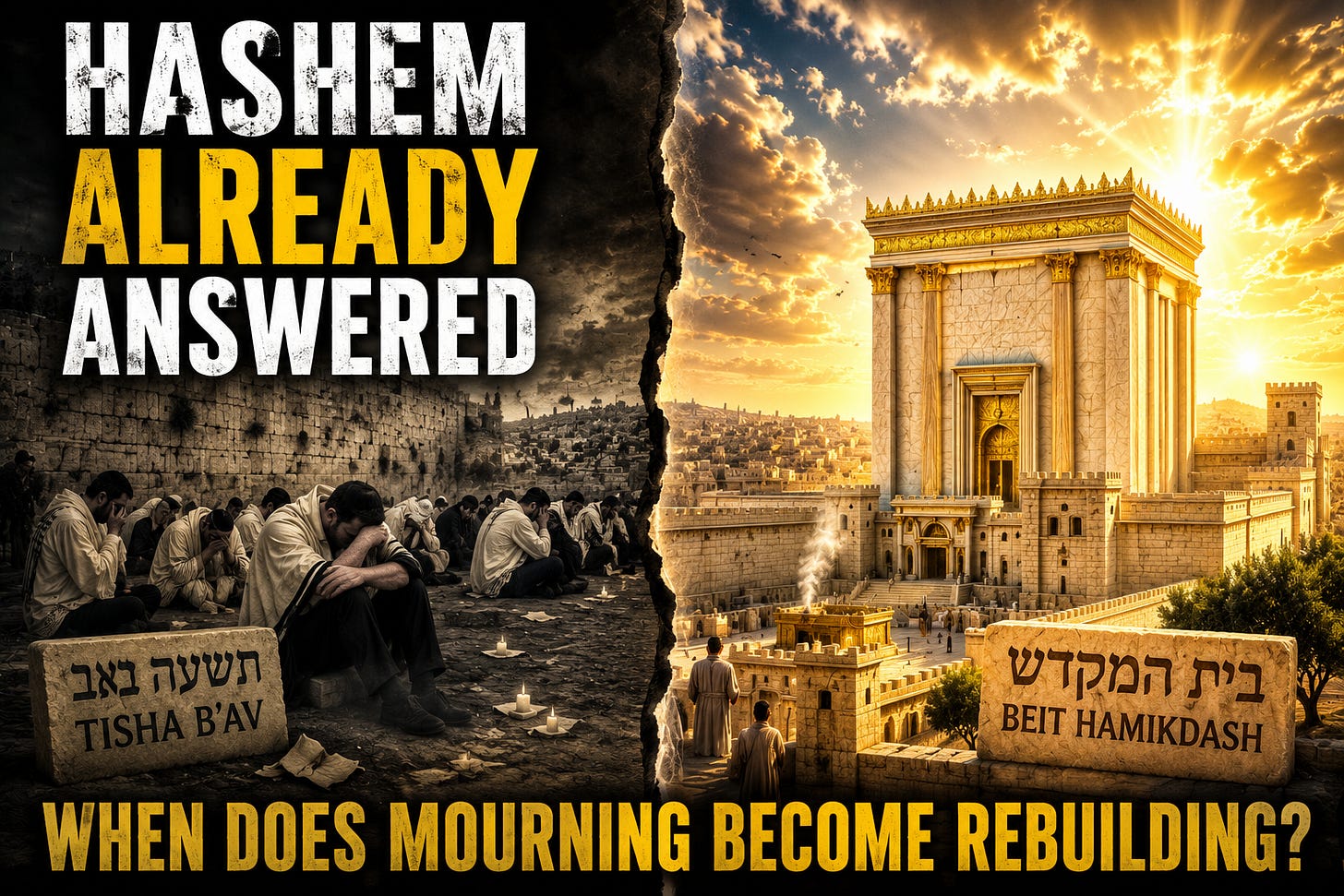
By Rabbi Josh Wander
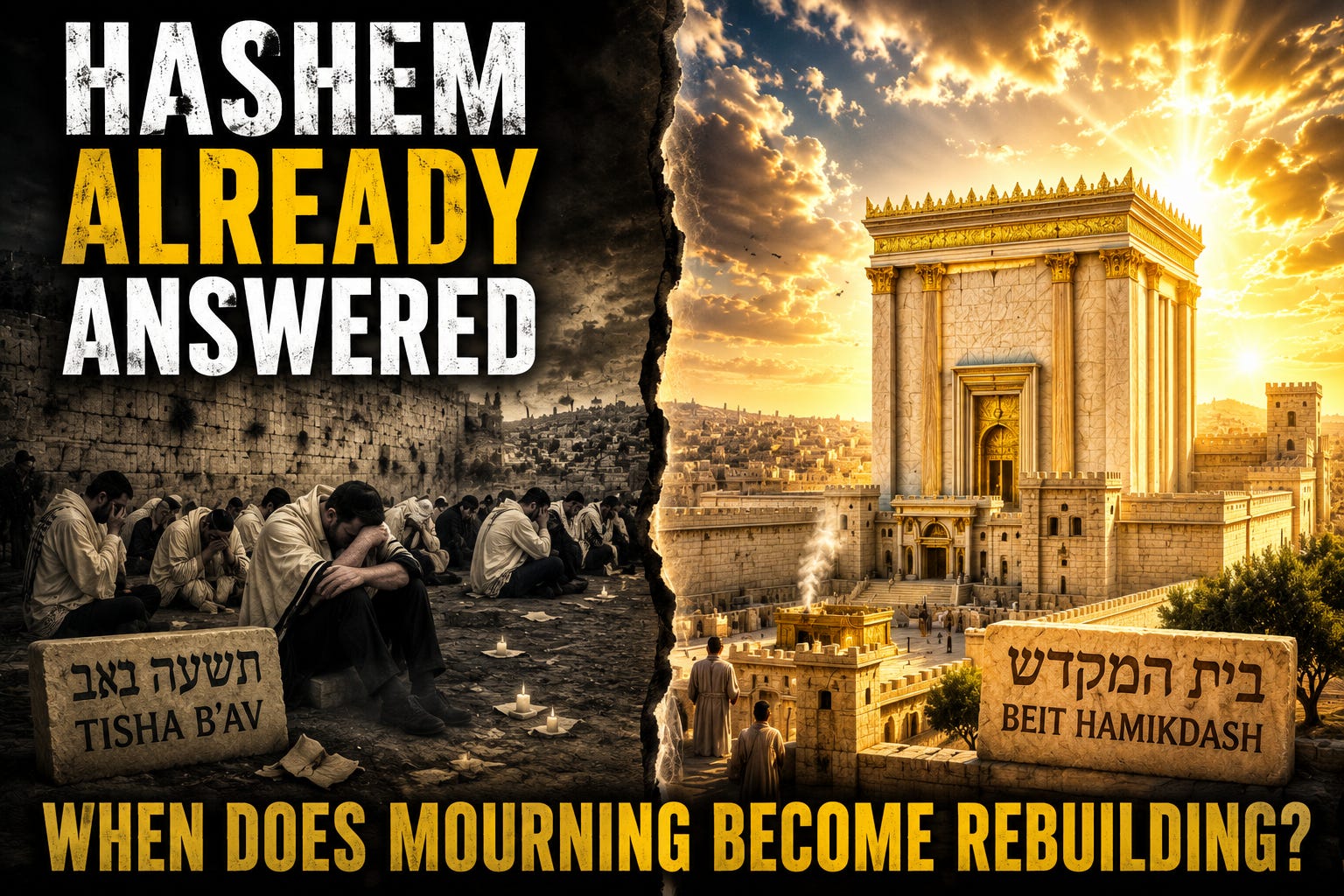
Every Tisha B’Av we mourn the destruction of the Beit HaMikdash (Holy Temple), recite Kinot (lamentations), and pray for redemption. For nearly two thousand years, prayer was all we could do. But the Torah compels us to ask a difficult question: Can there come a point when Hashem (God) has already answered our prayers, and the proper response is no longer only to pray, but to act?
When the Jewish people stood trapped between the Red Sea and the Egyptian army, Moshe Rabbeinu (Moses) cried out to Hashem. The Divine response was startling: “Why do you cry out to Me? Speak to the Children of Israel and let them journey forward.” (Exodus 14:15). Prayer was not rejected, but it had accomplished its purpose. Hashem had already opened the path. The time had come to move.
This is not the first time the Jewish people have faced such a moment. As the Second Beit HaMikdash was being rebuilt, the Jews of Bavel (Babylonia) sent a delegation to the prophet Zechariah asking whether they should continue fasting on Tisha B’Av. Rather than simply answering yes or no, Hashem challenged them to examine the purpose of their mourning and concluded with the promise that the fasts of the fourth, fifth, seventh, and tenth months would one day become days of joy and celebration. Mourning was never intended to become a permanent Jewish identity. It was meant to lead us toward redemption.
That same question confronts our generation. History has changed. Millions of Jews have returned to Eretz Yisrael (the Land of Israel). Hebrew has been revived. Jerusalem has been reunited. The Land has flourished, and the Jewish people once again possess sovereignty in their homeland.
Some maintain that the Third Beit HaMikdash will simply descend from Heaven without human participation. Yet the Rambam (Maimonides) teaches that in the Messianic era “the world will continue according to its natural order” (עולם כמנהגו ינהג). Redemption unfolds through history under Hashem’s guidance.
Even more striking is the Torah’s commandment: “ועשו לי מקדש ושכנתי בתוכם”—“They shall make for Me a Sanctuary, and I shall dwell among them.” This is one of the Torah’s 613 mitzvot (commandments), directed to the Jewish people—not to angels, nor delegated exclusively to Moshiach (the Messiah). The responsibility rests with the nation of Israel.
For nearly two thousand years, that mitzvah could not realistically be fulfilled. We lacked sovereignty, control of Jerusalem, and access to the Temple Mount. But everything changed in 1967. For the first time since the destruction of the Second Beit HaMikdash, the Jewish people once again possessed sovereignty over Jerusalem and access to the very place where the Torah commands us to build a Sanctuary. Hashem placed the Temple Mount back into Jewish hands. Previous generations could only dream of such a reality. Today, the question is no longer whether the mitzvah exists, but whether we recognize that Hashem has restored many of the conditions necessary for us to begin preparing to fulfill it.
This is not to suggest that every practical, political, or halachic (Jewish legal) question has already been resolved. It is to recognize that we can no longer treat this mitzvah as merely theoretical while praying daily for its fulfillment. If Hashem has restored the opportunity, are we prepared to accept the responsibility?
That may be the greatest challenge of all. We become so accustomed to exile that we fail to recognize redemption when it begins unfolding before our eyes. We pray for the ingathering of the exiles while remaining comfortably in the Diaspora. We dream of ascending to Jerusalem on the Shalosh Regalim (Three Pilgrimage Festivals), yet many travel everywhere except the city our ancestors longed to see. Prayer was never meant to replace responsibility. It was meant to prepare us to answer Hashem’s call.
One of the most remarkable Midrashim (rabbinic teachings), beautifully preserved in Yossi Green’s song, describes Moshiach standing upon the rooftop of the Beit HaMikdash proclaiming, “ענווים, ענווים, הגיע הזמן גאולתכם”—“Humble ones, humble ones, the time of your redemption has arrived.” The Midrash then adds the astonishing words, “ואם אין אתם מאמינים”—“And if you do not believe…” Even with the Beit HaMikdash standing before them and Moshiach himself announcing redemption, there will still be those who refuse to believe. The Midrash teaches that the greatest obstacle to redemption may not be its arrival, but our inability to recognize it.
None of this diminishes the importance of prayer. Prayer remains indispensable. But there comes a moment when Hashem says, “I have heard you. Now move forward.” If we truly believe redemption is unfolding, then our response should include Aliyah (immigration to Israel), a renewed attachment to Jerusalem, greater study of the Beit HaMikdash, and practical preparation for the responsibilities that redemption places upon us.
As we sit on the floor this Tisha B’Av, perhaps the most important prayer we can offer is not only that Hashem rebuild the Beit HaMikdash, but that He fulfill the promise of the prophet Yechezkel (Ezekiel): “I will remove the heart of stone from your flesh and give you a heart of flesh.” (Yechezkel 36:26). May He grant us hearts capable of recognizing His hand in history, embracing the responsibilities of redemption, and answering His call just as He instructed Moshe: “Why do you cry out to Me? Speak to the Children of Israel and let them journey forward.”