
By Rabbi Josh Wander
It is not often that we can watch a regional conflict unfold and, for the moment, breathe a small sigh of relief. As the latest battles rage across the Middle East, Israel is not the primary battlefield. For that alone, we should pause and thank Hashem. Much of the conflict appears to be playing out between Arab countries themselves and, perhaps, between forces that, in many ways, reflect the age-old struggle represented by Yishmael and Eisav. Every day that Israeli families are spared from missile barrages, every day our soldiers are not called into another major campaign, and every day our children can wake up to a quieter morning is a gift from Hashem for which we should express genuine gratitude.
Recently, I have heard several Israeli officials explain this relative calm by saying that Iran has been successfully deterred. Their argument is that Tehran now understands that any direct attack on Israel would trigger such a devastating response that it is simply unwilling to take the risk. That may very well be true. Effective deterrence is an important achievement, and if our enemies hesitate before acting because they know the consequences will be severe, that is something to be welcomed. Israel must always maintain overwhelming military strength. A strong IDF saves lives, prevents wars, and forces our enemies to think twice before making reckless decisions. At the same time, if October 7 taught us anything, it is that deterrence should never become a conceptzia.
One of the greatest strategic failures before that terrible day was the widespread belief that Hamas had been deterred, that economic incentives had moderated its ambitions, and that it no longer sought a large-scale confrontation. The assumption was not that Hamas loved us; it was that Hamas had become predictable. That illusion collapsed in a single morning.
Now we may already be witnessing the first signs of another dangerous illusion. In the latest attacks, we have once again seen the Palestinian Authority rear its ugly head. With the possibility of future elections always looming, its leadership appears eager to demonstrate to its own constituency that it has not strayed from its longstanding confrontation with Israel. One of the clearest reminders of this is its continued “pay-for-slay” policy, under which financial payments are provided to imprisoned terrorists and to the families of many who carried out attacks against Israelis. As long as terrorism continues to be rewarded and glorified, we should not deceive ourselves into believing that the underlying ideology has disappeared. And let us not forget that their leader is a Holocaust denier. Almost overnight, the sense of deterrence many Israelis felt internally after October 7 has begun to erode, and terrorists who had kept a lower profile appear increasingly emboldened to emerge from the shadows once again.
This is precisely why we must be careful not to replace one conceptzia with another. Deterrence is not the same as peace, nor is it the same as surrender. More often than not, deterrence simply means that an enemy has decided to wait for a more advantageous moment. We should never confuse patience with defeat.
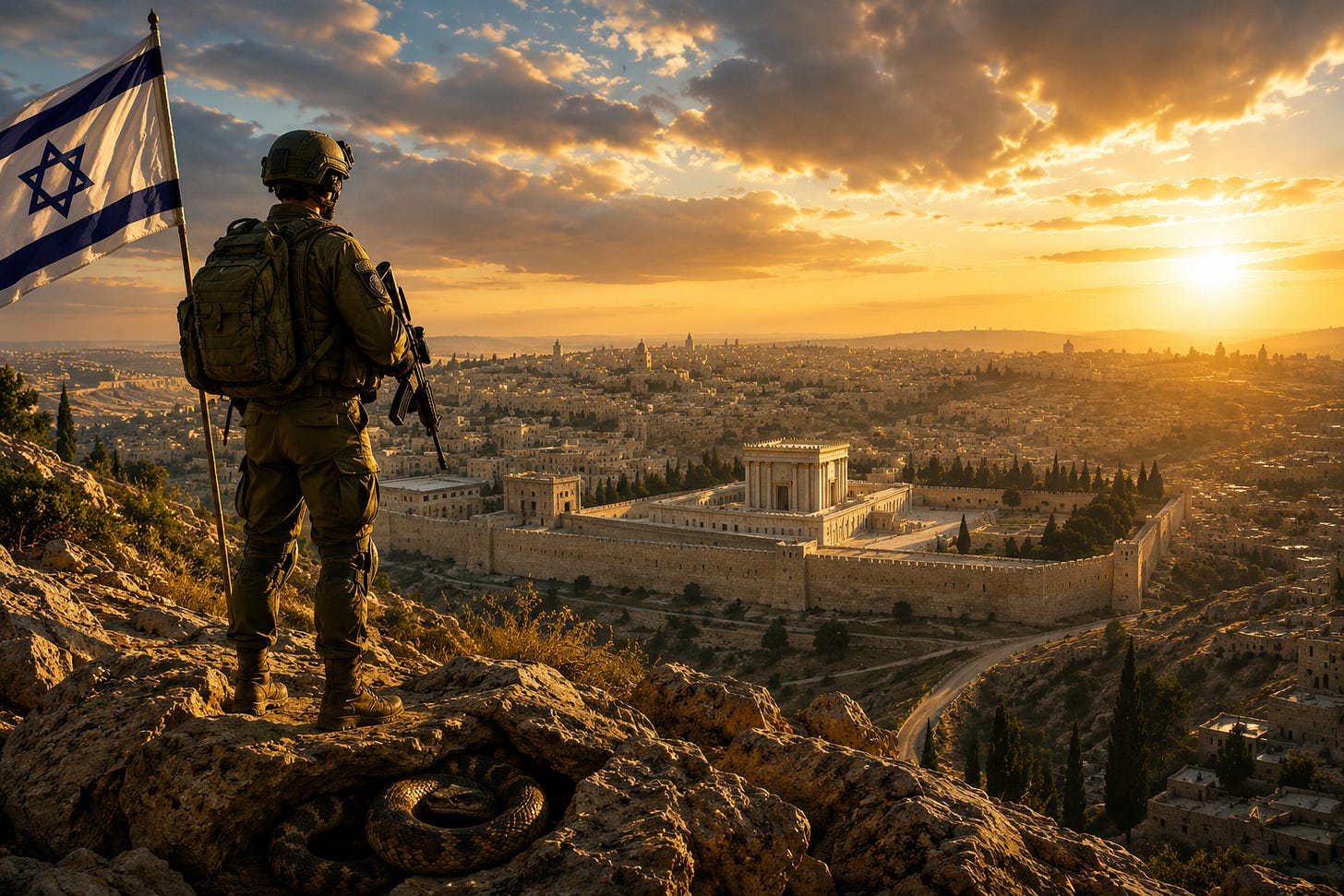
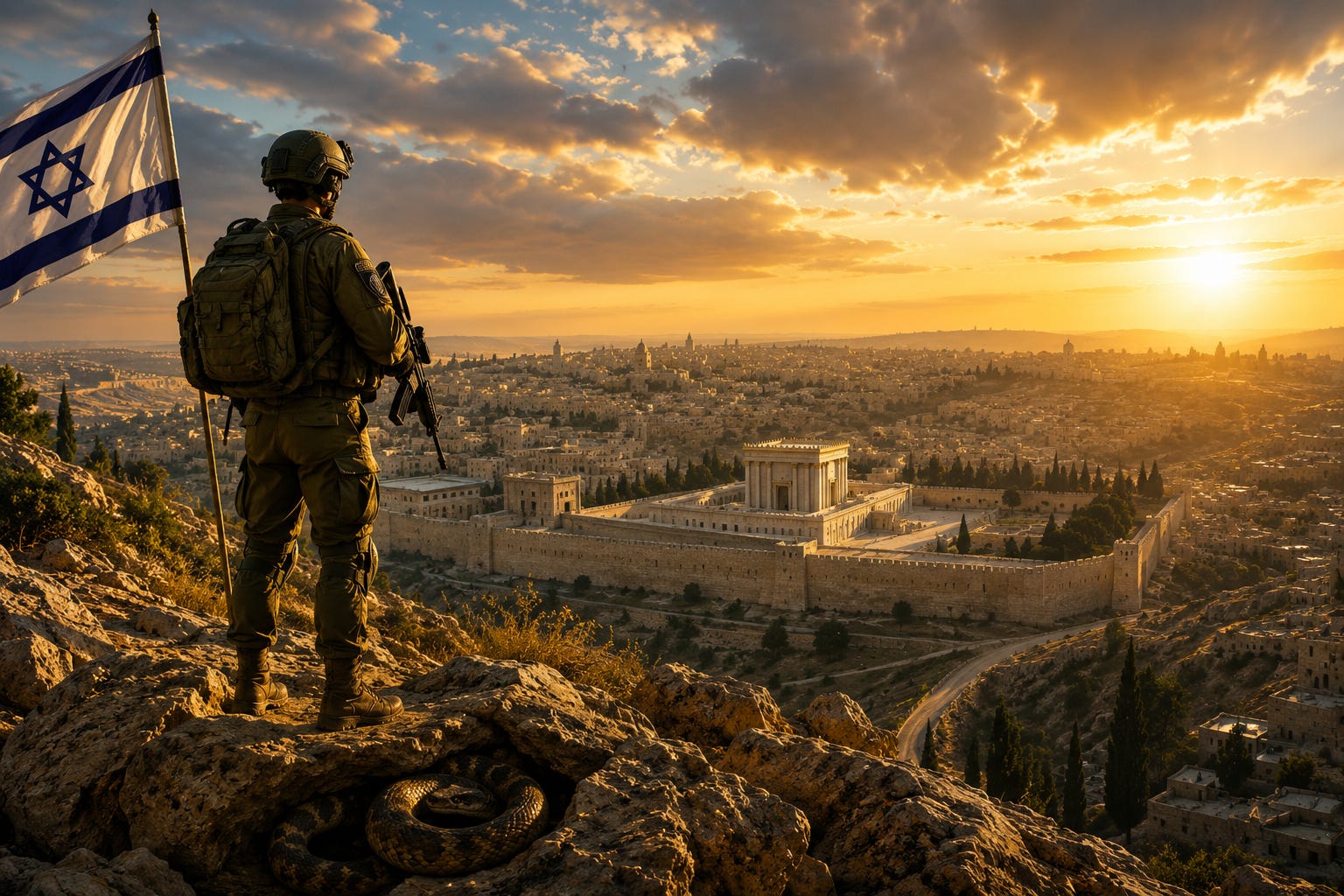
Western societies often think in remarkably short timeframes. Governments measure success by the next election. Markets focus on the next quarterly report. The media lives from one news cycle to the next. Our strategic thinking is often compressed into months or, at best, a few years. Many of our adversaries do not think that way. China, Russia, Iran, and the terrorist organizations they support are prepared to think in decades. They understand that sometimes the wisest strategy is to remain quiet, rebuild capabilities, strengthen alliances, and wait for circumstances to become favorable. A snake does not reveal itself by striking constantly. It remains coiled, motionless, and patient until the right opportunity presents itself.
That is why Israel must never adopt only a tactical mindset. We must think strategically, not merely militarily. We must plan not only for the next operation, but for the next generation. The popular Israeli phrase “עם הנצח לא מפחד מדרך ארוכה”—“The Eternal Nation is not afraid of a long journey”—is far more than an inspiring slogan. It should become our national strategy. Unlike most nations, we are not building a country meant to last until the next election cycle. We are rebuilding an eternal nation that has returned home after nearly two thousand years of exile. We should therefore think in generations rather than governments, in centuries rather than headlines. Tactical victories are important, but they must always serve a much greater strategic vision.
This long-term perspective applies not only to our external enemies but also to our internal challenges. Political divisions, ideological disputes, and social fractures have not disappeared. They have merely become quieter during times of crisis. We cannot allow ourselves to believe that temporary unity or temporary calm means that the underlying problems have been solved. Just as we must remain vigilant against external threats, we must also continue repairing the internal divisions that have weakened our people throughout history. National resilience is measured not only by the strength of an army, but also by the unity and resolve of the people standing behind it.
None of this means we should live in fear. Quite the opposite. We should live with confidence—but confidence rooted in reality rather than illusion. Israel absolutely must possess the strongest military in the region. We must continue developing new technologies, strengthening our intelligence services, training our soldiers, and ensuring that every enemy understands the unbearable cost of attacking the Jewish State. That is our hishtadlut—our obligation to do everything within human ability to protect Jewish lives. At the same time, we must never mistake the instrument for the Source. The strength of the biblical Samson was never found in his muscles. It came entirely from Hashem. When that relationship was severed, his physical strength alone could not save him. The same is true for us as a nation. Military power is indispensable, but it has never been the ultimate source of Israel’s security.
Let others measure history by election cycles, quarterly earnings, or the evening news. We measure it in generations. We are עם הנצח—the Eternal Nation. We are not afraid of a long journey because we know Who guides it. That confidence does not make us passive. On the contrary, it obligates us to prepare even more diligently. We will build the strongest army possible. We will continue to develop the most advanced technology. We will remain vigilant against every enemy. We will never again allow ourselves to be lulled into another conceptzia. Our army is our hishtadlut. Our strategy is our responsibility. Our deterrence is our necessity.
King David declared, “אלה ברכב ואלה בסוסים, ואנחנו בשם ה’ אלוהינו נזכיר”—“Some trust in chariots and some in horses, but we invoke the name of Hashem, our God.” (Psalms 20:8). Chariots were the cutting-edge military technology of their day. Today they have become fighter jets, drones, missile-defense systems, satellites, and cyber capabilities. We are obligated to build them, master them, and use them wisely. We should never apologize for being strong, nor should we ever neglect our responsibility to defend Jewish lives. But we must never confuse the means with the Source. Our victories have never come from iron alone.
The prophet Shmuel reminds us, “נצח ישראל לא ישקר”—“The Eternal One of Israel does not lie.” (I Samuel 15:29). The eternity of Israel does not rest upon the strength of our weapons, the brilliance of our commanders, or the success of our deterrence. It rests upon the eternal covenant between Hashem and His people. That is why we can face the future with confidence rather than complacency, vigilance rather than fear, and determination rather than despair. We know Who guides history, and we know that the One who preserved Israel through Pharaoh, Sennacherib, Nebuchadnezzar, Haman, Rome, the Crusades, the Inquisition, the Holocaust, and every empire that believed it would outlast us remains the true source of our strength, our endurance, and our ultimate redemption. Because נצח ישראל לא ישקר, עם הנצח לא מפחד מדרך ארוכה.