
By Rabbi Josh Wander
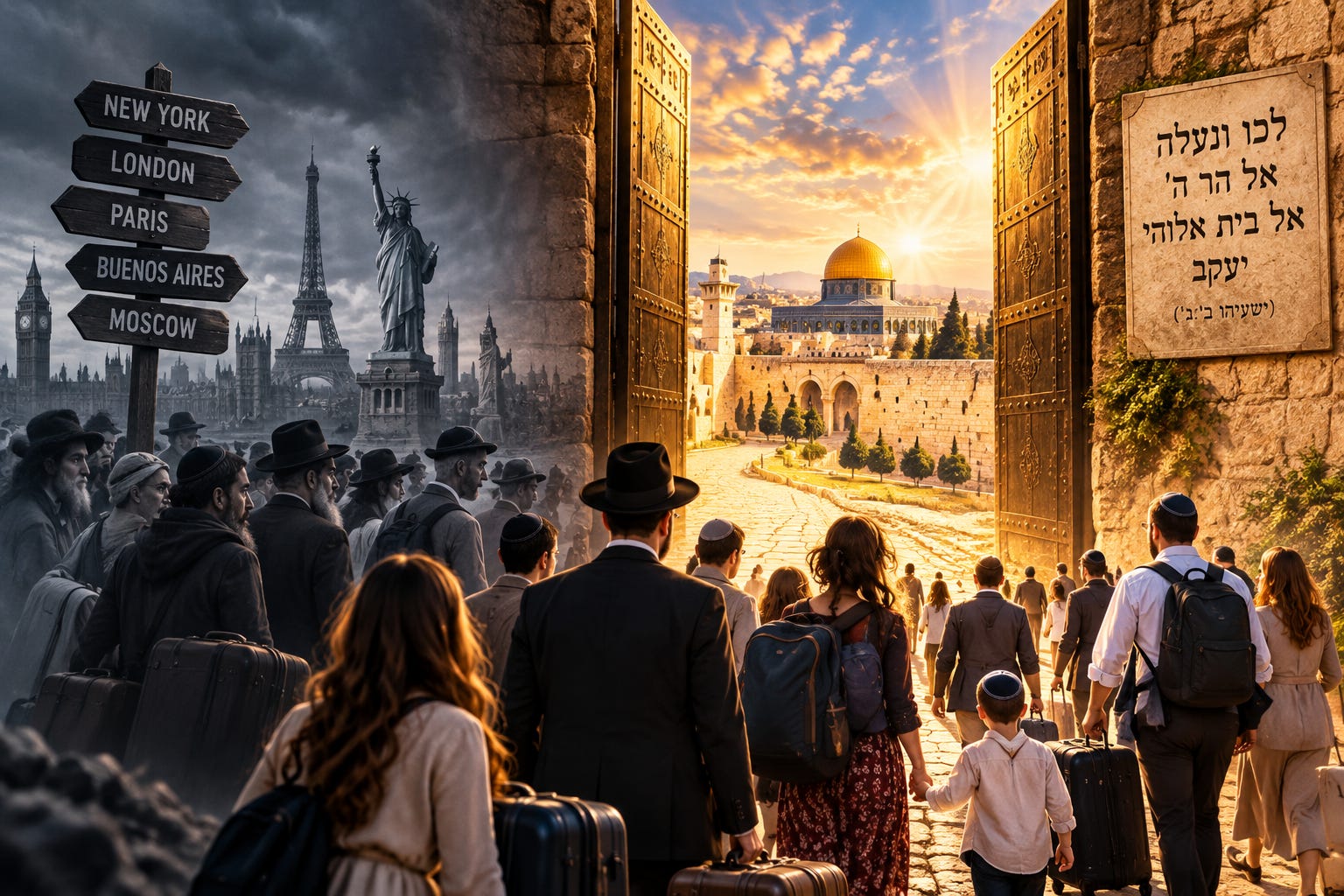
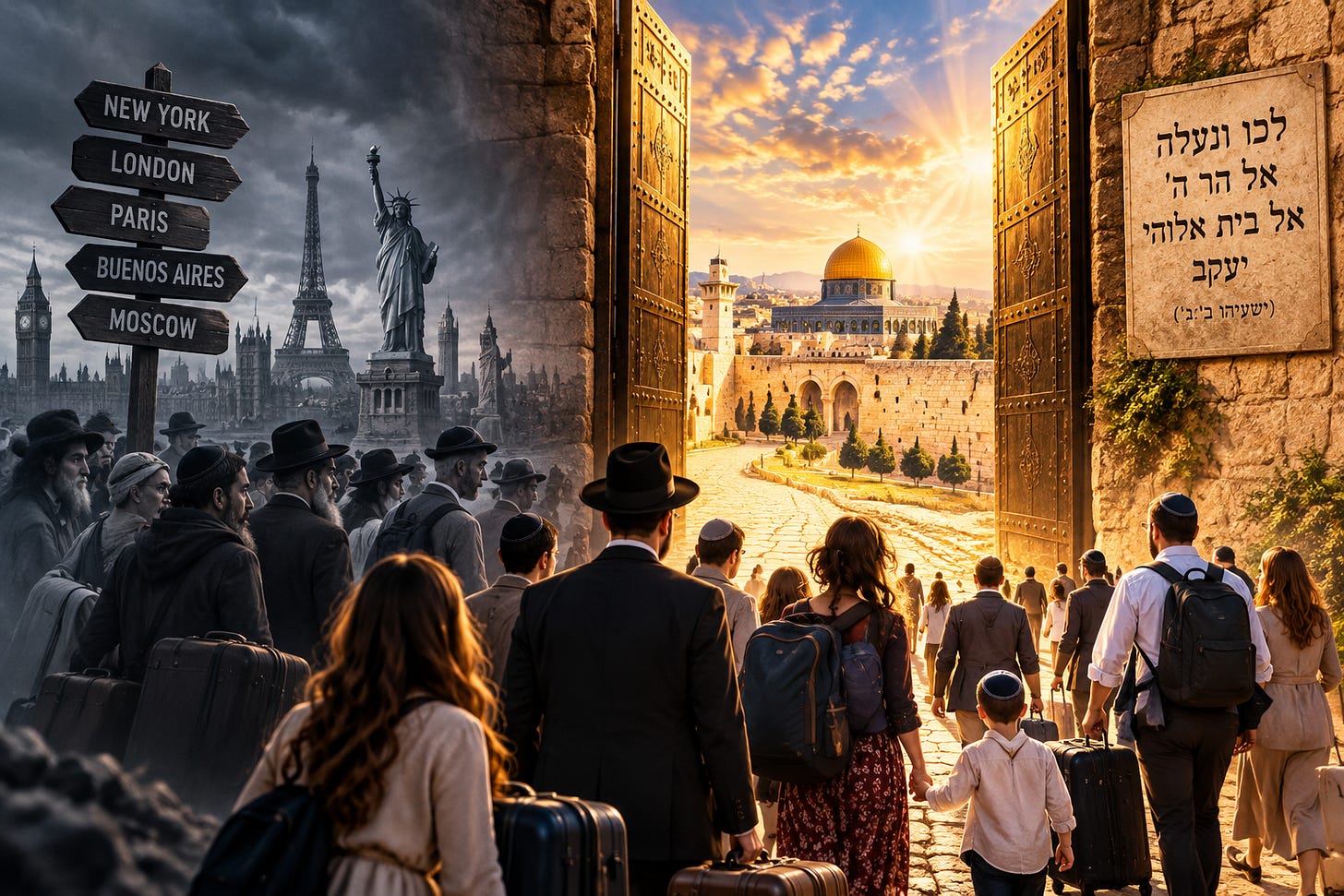
For nearly two thousand years, the Jewish people prayed for the opportunity to return to their ancestral homeland. Three times a day, we begged Hashem to gather us from the four corners of the earth. At our weddings, we remembered Jerusalem. At the conclusion of the Pesach Seder and Yom Kippur, we proclaimed, “לשנה הבאה בירושלים”—Next year in Jerusalem. Generations of Jews lived and died dreaming of a return they would never experience. Yet what happens when those prayers are finally answered, when the gates of Eretz Yisrael are opened, and the Jewish people are given the opportunity to come home—but choose to remain in exile? The answer may be found in one of the most disturbing episodes in Jewish history.
Following the death of King Shlomo, the united Kingdom of Israel was divided. Yeravam ben Navat became king of the northern Ten Tribes, while Rechavam, Shlomo’s son, ruled over Yehudah and Yerushalayim. Yeravam understood that allowing his subjects to continue ascending to the Beit HaMikdash for the three pilgrimage festivals would threaten his political authority. Their spiritual connection to Jerusalem might eventually restore their allegiance to the Davidic monarchy. Rather than risk losing power, Yeravam established alternative centers of worship in Beit El and Dan and stationed guards along the roads to prevent Jews from traveling to Jerusalem. Political expediency had effectively severed an entire kingdom from its spiritual heart.
For generations, this division continued. Jews living in the northern kingdom were prevented from fulfilling the mitzvah of Aliyah LaRegel, ascending to the Beit HaMikdash on Pesach, Shavuot, and Sukkot. Eventually, however, something extraordinary happened. Hoshea ben Eilah, the last king of the northern kingdom, removed the roadblocks. The Gemara in Taanit 30b–31a identifies this event as one of the reasons Tu B’Av became a day of celebration. After generations of enforced separation, the roads to Jerusalem were finally reopened. Jews could once again travel freely to the spiritual capital of their nation.
But there was a problem. Hoshea removed the guards, yet he did not compel his subjects to return to Jerusalem. He simply allowed people to go wherever they wished. The physical barriers had disappeared, but the spiritual barriers remained. Generations of separation had accomplished something far more dangerous than preventing travel. They had conditioned the Jewish people to become comfortable living disconnected from Jerusalem. What had begun as an externally imposed restriction had become an internally accepted reality.
The Gemara in Gittin 88a makes an astonishing observation. Rav Kahana and Rav Asi asked Rav why the northern kingdom was destroyed specifically during the reign of Hoshea, when the Tanach itself describes him as less wicked than the kings who preceded him. Shouldn’t the removal of the roadblocks have been a merit that protected his kingdom? Rav’s answer is devastating. Hoshea had removed the guards, yet the people still did not ascend to Jerusalem. Hashem therefore declared that for those years in which they failed to ascend, they would be taken into captivity. Shortly thereafter, the Assyrians conquered Shomron and exiled the Ten Tribes.
Consider the implications. For generations, the people could argue that they were prevented from ascending. They had a legitimate obstacle standing between them and Jerusalem. But once that obstacle disappeared, the responsibility shifted. Their failure to return was no longer attributable simply to an oppressive king. It had become their own choice. The very freedom that should have brought about a national spiritual revival instead exposed the depth of their alienation. The gates had opened, but the people did not come.
Could there be a more frightening parallel to the situation confronting the Jewish people today?
For almost two thousand years following the destruction of the Second Beit HaMikdash, the Jewish people endured exile, persecution, expulsions, and unimaginable suffering. Returning to Eretz Yisrael was frequently dangerous, prohibitively expensive, or practically impossible. Foreign rulers controlled access to the Land, and Jewish communities often lacked the means to uproot themselves. Nevertheless, throughout the centuries, extraordinary individuals and communities made tremendous sacrifices to return. Their journeys were acts of faith, undertaken despite obstacles that most of us can scarcely imagine.
Then came 1948. With the establishment of the modern State of Israel, something unprecedented occurred in Jewish history. For the first time in nearly two millennia, the Jewish people possessed a sovereign state in their ancestral homeland, dedicated to providing a national home and refuge for Jews throughout the world. The gates were opening. The Law of Return, enacted in 1950, would further establish the right of Jews to immigrate and receive citizenship. What generations had prayed for was no longer merely an aspiration. It had become a practical possibility.
When Hashem removes the barriers that prevented us from fulfilling our national destiny, our responsibility changes. We can no longer automatically rely upon the excuses of previous generations.
And yet, more than seventy-eight years after the establishment of the State of Israel, millions of Jews continue to live throughout the Diaspora. Many have the financial means, professional flexibility, family connections, and legal opportunity to make Aliyah, but simply do not consider it a priority. They visit Israel, donate to Israeli institutions, celebrate Yom HaAtzmaut, and passionately defend the Jewish state from abroad. They may even maintain apartments in Jerusalem while spending most of their lives elsewhere. But when confronted with the possibility of actually returning home, they often respond with an endless list of reasons why the time is not right.
This is precisely what makes the story of Hoshea ben Eilah so unsettling. The danger was not merely that the northern tribes refused to travel. It was that they had become accustomed to their separation. The unnatural had become normal. Jerusalem was no longer experienced as the center of their national existence, but as an optional destination. Their exile from their spiritual center had become a matter of personal preference rather than national tragedy. And once the roads reopened, their reluctance to return revealed just how deeply that mentality had taken root.
But there is another dimension to this historical parallel, one that strikes even closer to home. The lesson of Hoshea ben Eilah is not limited to Jews living in the Diaspora who have the opportunity to return to Eretz Yisrael. It also raises a profound question for those of us who already live here. In 1967, during the Six-Day War, the Jewish people regained control of Har HaBayit, the site of our two Batei Mikdash, after nearly two thousand years without Jewish sovereignty over our holiest site. Nearly sixty years have passed since that extraordinary moment. Yet the overwhelming majority of Jews, including those living just minutes away in Jerusalem, have never ascended to the mountain. Once again, we are confronted with the distinction between having an opportunity and actually embracing it.
The parallel to the northern kingdom is remarkable. Yeravam ben Navat placed guards along the roads to prevent Jews from ascending to the Beit HaMikdash. Hoshea ben Eilah removed those guards, but the people largely remained where they were. Today, although Jewish access to Har HaBayit remains subject to significant restrictions and serious halachic disagreements concerning entry, many Jews who could ascend under existing arrangements choose not to do so. Some refrain because they follow rabbinic rulings prohibiting entry, a position that must be distinguished from indifference. Others, however, have simply grown accustomed to a Jewish reality in which the holiest place in Judaism remains absent from their religious consciousness and daily priorities. The question is not merely whether the physical gates are open, but whether our hearts have opened with them.
The Gemara’s warning should therefore provoke an uncomfortable examination of our national spiritual priorities. We have witnessed the return of Jewish sovereignty to Eretz Yisrael and the restoration of Jewish access to the place toward which our ancestors prayed for generations. Yet how often do we seriously contemplate the rebuilding of the Beit HaMikdash, the restoration of the Avodah, and the centrality of Har Beit Hashem to Jewish national life? Nearly sixty years after 1967, have we fully appreciated the historical significance of what has become possible, or have we normalized a reality that previous generations could scarcely have imagined?
And perhaps the most frightening aspect of this entire historical parallel is the possibility of a kitrug—a heavenly accusation against our generation. As time passes, the opportunities that Hashem has placed before us become increasingly difficult to ignore. What previous generations could accomplish only through extraordinary sacrifice has, for many Jews today, become a practical possibility. We can board an airplane and arrive in Eretz Yisrael within hours. We can establish homes, build communities, raise families, and participate in the rebuilding of Jewish national life. And here in Jerusalem, we have once again been granted access, under certain conditions, to Har Beit Hashem, the very place toward which our ancestors directed their prayers for nearly two thousand years. Could the failure to recognize and embrace these extraordinary opportunities itself become a source of heavenly judgment?
The Gemara’s account of Hoshea ben Eilah suggests that there is a profound difference between being prevented from fulfilling one’s national and spiritual responsibilities and declining to act when the obstacles have been removed. The longer the gates remain open, the more uncomfortable the question becomes. If Hashem has placed before us opportunities that countless generations begged to experience, what answer will we give when asked why we failed to appreciate them? Can we continue praying for the ingathering of the exiles while treating our own participation as optional? Can we continue begging for the restoration of the Divine Presence to Zion while allowing Har Beit Hashem to remain peripheral to our religious consciousness?
This is not to dismiss the genuine difficulties of Aliyah or the sincere halachic convictions of those who refrain from ascending Har HaBayit. Nor can any of us presume to know the calculations of Heaven. But the possibility of a kitrug should at least awaken us to the seriousness of the moment. Perhaps the greatest danger is not that Hashem has failed to answer our prayers, but that He has begun answering them in ways that demand something of us—and we have become too comfortable to respond. Chas v’shalom, may we never discover that the opportunities we took for granted were themselves the measure by which our generation was judged.
The prophet Yeshayahu envisioned a time when the nations would proclaim, לְכוּ וְנַעֲלֶה אֶל הַר ה׳ אֶל בֵּית אֱלֹהֵי יַעֲקֹב—”Come, let us ascend to the mountain of Hashem, to the House of the God of Yaakov” (Yeshayahu 2:3). The ultimate vision of Geula is not merely Jewish sovereignty or national security, but the restoration of Jerusalem as the spiritual center of humanity. Similarly, Tehillim 102:14–15 declares, אַתָּה תָקוּם תְּרַחֵם צִיּוֹן כִּי עֵת לְחֶנְנָהּ כִּי בָא מוֹעֵד. כִּי רָצוּ עֲבָדֶיךָ אֶת אֲבָנֶיהָ וְאֶת עֲפָרָהּ יְחֹנֵנוּ—”You will arise and have mercy on Zion, for the time to favor her has come, the appointed time has arrived. For Your servants cherish her stones and favor her dust.” The Psalm connects the appointed time for Zion’s restoration with the affection of Hashem’s servants for her very stones and dust. Our response to the opportunities of Geula can itself become a source of merit.
The history of the Ten Tribes should make us profoundly uncomfortable. Their downfall did not occur simply because they had been prevented from reaching Jerusalem. According to the Gemara, the decisive indictment came when they were finally permitted to ascend and still failed to do so. Their exile was not merely a punishment for generations of enforced separation, but for failing to seize the opportunity when that separation ended. The historical circumstances were different, but the spiritual warning echoes across the centuries.
None of us can claim to know Hashem’s calculations, and it would be irresponsible to declare that a particular catastrophe must befall Diaspora Jewry. We are not prophets, and we cannot mechanically apply the decree against the northern kingdom to Jews living outside Israel today. But we would be equally irresponsible to dismiss the warning embedded in our own sacred texts. Jewish history teaches that opportunities are not necessarily permanent and that failing to recognize a moment of Divine providence can have devastating consequences. Chas v’shalom, we must consider whether continued complacency in exile could expose our people to dangers that might otherwise have been avoided.
The establishment of the State of Israel was not the completion of the Geula, but it fundamentally transformed the possibilities available to the Jewish people. We are no longer living in the same historical circumstances as our ancestors. The gates that were closed for centuries have been reopened, and millions of Jews have already walked through them. The question is whether the rest of our people recognize the significance of this moment or whether, like the northern tribes, they have become so comfortable with their circumstances that they fail to appreciate the opportunity standing before them.
Perhaps this is one of the most urgent messages that rabbis, Jewish educators, and communal leaders should be communicating today. It is not enough to teach Jews to love Israel, support Israel, or pray for Israel. We must restore the understanding that Eretz Yisrael is not merely another destination on the Jewish map. It is our national homeland, the place toward which our prayers, our history, and our destiny have always pointed. The responsibility of leadership is not simply to preserve Jewish life wherever Jews happen to reside, but to help guide the Jewish people toward the fulfillment of their national mission.
For nearly two thousand years, the Jewish people stood before Heaven and asked, “When will You open the gates for us?” Could it be that Heaven is now asking the Jewish people, “I have opened the gates for you. Why have you not come?”