
By Rabbi Josh Wander
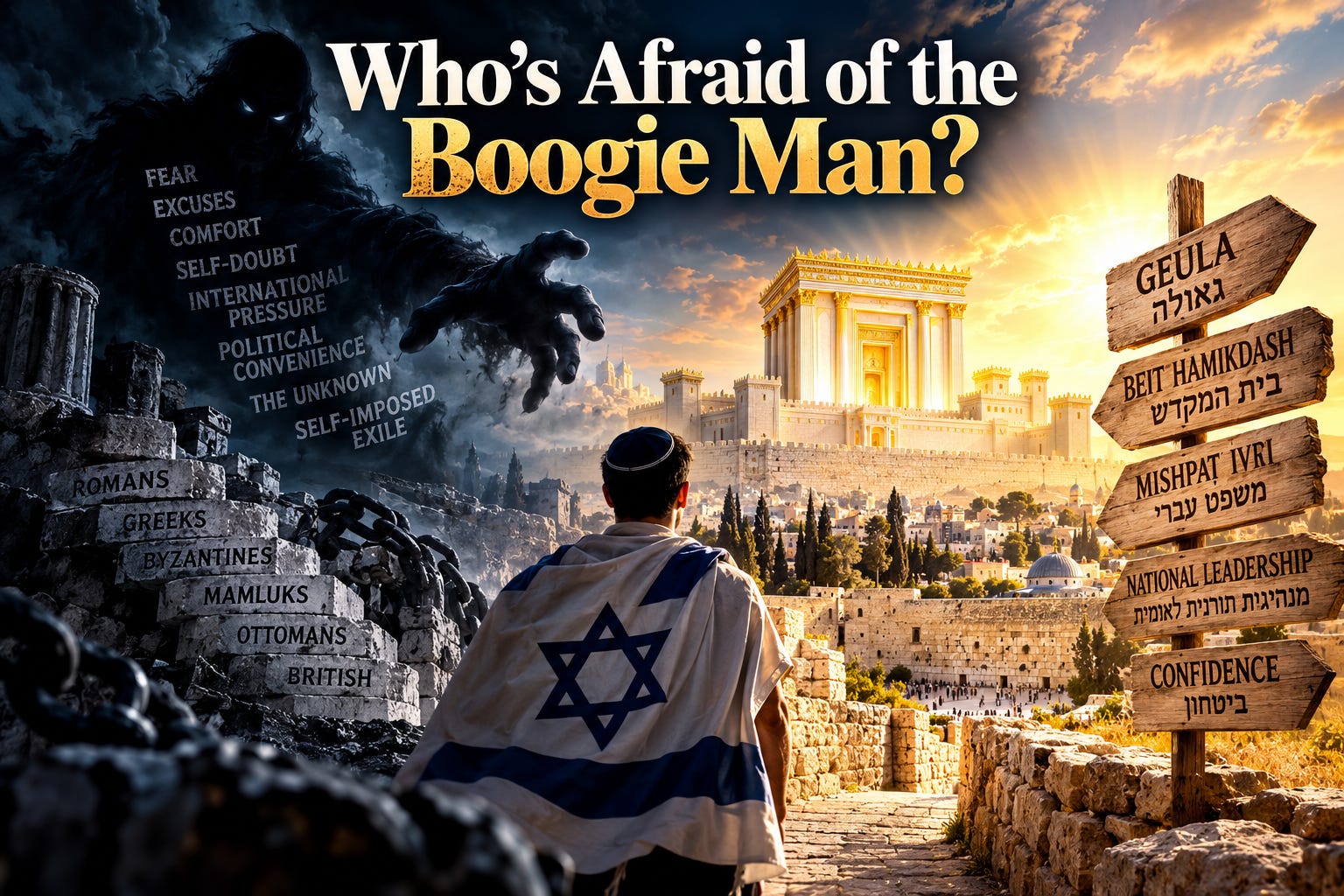
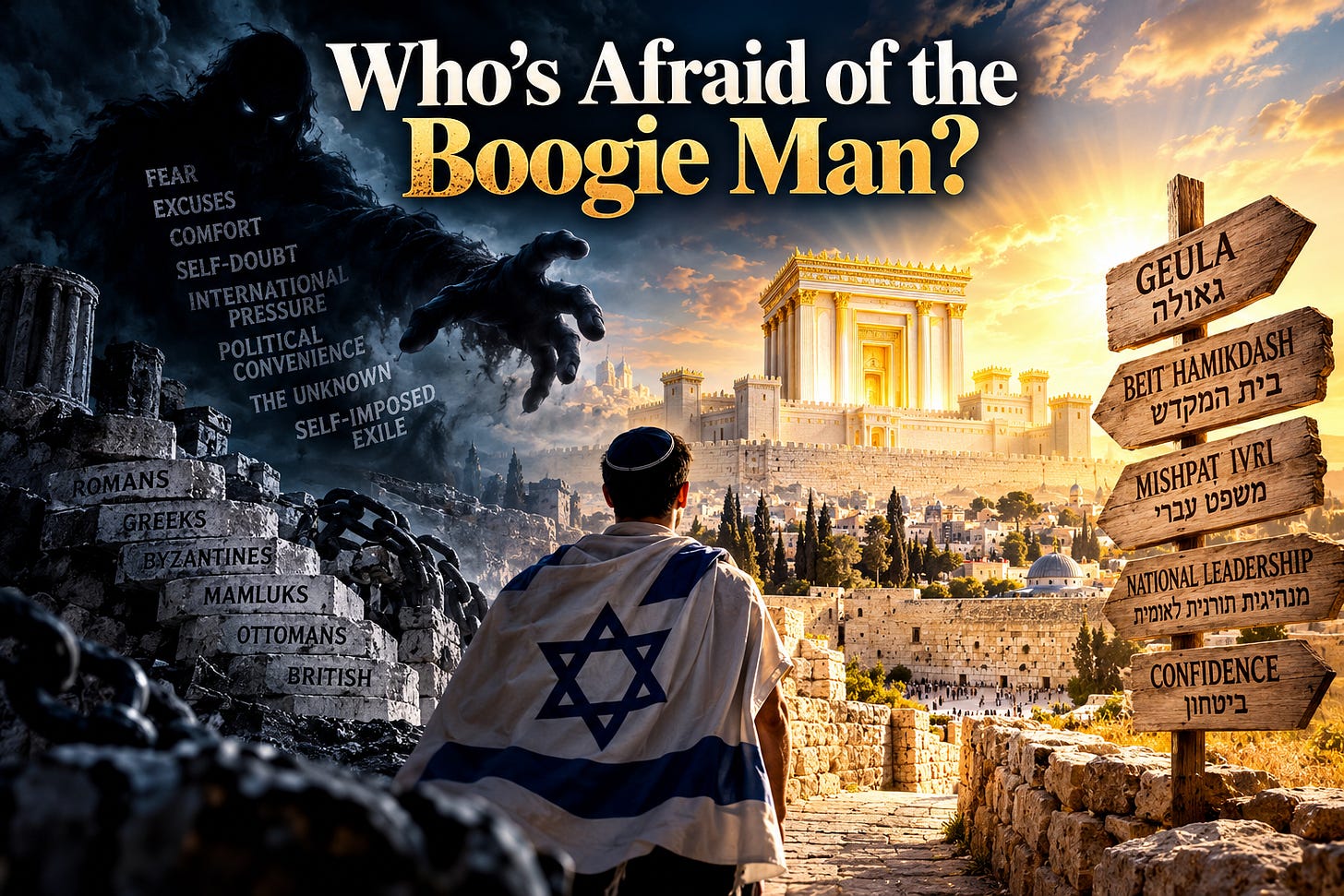
As the years go by, I become more and more convinced that one of the greatest obstacles holding us back in the process of Geula—Redemption—is ourselves. The old Pogo line has become painfully prophetic: “We have met the enemy and he is us.” For nearly two thousand years, we could point to someone else. There was always a boogie man standing between the Jewish people and the fulfillment of our national destiny. But what happens when the boogie man disappears?
For generations, the answer was easy. Why couldn’t we return to our Land, rebuild Jerusalem or restore the Beit HaMikdash? Because foreign powers stood in our way. The Romans, Byzantines, Mamluks, Ottomans and British came and went, but there was always a foreign hand controlling our Land and holy places. Then came 1967. In six extraordinary days, Yerushalayim was reunited under Israeli control, Jewish soldiers stood at the Kotel and Har HaBayit was captured by Israeli forces. Whatever one believes about the precise halachic requirements and timing of rebuilding the Beit HaMikdash, the foreign sovereign power physically preventing us from controlling our holiest place was gone. Yet almost sixty years later, there is still no Beit HaMikdash.
Year after year, festival after festival, we continue to recite in Mussaf: “גלינו מארצנו והתרחקנו מעל אדמתנו ואין אנחנו יכולים לעלות ולראות ולהשתחוות לפניך… מפני היד שנשתלחה במקדשך”—“We were exiled from our Land and distanced from our soil, and we are unable to ascend, appear and bow before You… because of the hand that was stretched forth against Your Sanctuary.” Those words should make us tremble today, because we must ask a question our ancestors never needed to ask: Whose hand? Once it was the hand of Rome and the succession of foreign powers that followed. But whose hand is preventing us now? The uncomfortable answer may be that the hand has become our own.
I am increasingly convinced that what holds us back is fear, particularly fear of advancing into the unknown. We know Galut. We lived it for two thousand years and understand its rules. Geula demands that we enter a reality no living generation has experienced. So we find reasons not to move forward. It isn’t politically expedient. It isn’t realistic. Washington will object. The United Nations will condemn us. The Muslim world will erupt. The international community will never accept it. Some of these concerns are real and responsible leaders must consider them. But at what point does prudence become paralysis?
Perhaps we have become comfortable in a self-imposed exile. For centuries Galut was imposed upon us by others. Today we can live in Jerusalem while continuing to think like exiles. We can possess sovereignty while remaining psychologically dependent upon the permission of others. We can hold the keys in our own hands while behaving as though someone else has locked the door. This is not an argument for recklessness; Torah does not command recklessness, and Geula does not excuse ignoring halacha, human life or consequences. But there is an enormous difference between responsibly asking how we should advance and spending generations explaining why we cannot.
This raises another uncomfortable question. If restoration of the Beit HaMikdash is important enough to occupy such a prominent place in our prayers, why is it virtually absent from our political discourse? We mourn its destruction, fast over its loss and repeatedly ask Hashem to restore His service to His House. Yet religious political parties enter coalition negotiations demanding budgets, education funding, religious services, Shabbat protections, yeshiva support and other priorities while the Mikdash barely enters the conversation. Why isn’t serious consideration of Har HaBayit and the restoration of the Mikdash a national religious objective? Why isn’t it even on the agenda?
No religious party needs to pretend that the answers are simple. There are enormous halachic, security and diplomatic questions involved. But surely a movement entering politics in the name of Torah could demand serious study, planning and halachic deliberation about one of Judaism’s most fundamental aspirations. Prayer is safe. Prayer does not require a coalition crisis, an international confrontation or a decision about what happens tomorrow morning. We can ask Hashem to restore His Presence to Zion while leaving all the consequences comfortably in His hands. The moment we ask what we are supposed to do about those prayers, however, the unknown becomes frighteningly real.
But the question is even bigger than politics. Why isn’t this part of our religious discourse? Where are the rabbis? Where is the open discussion among our greatest Torah scholars about the national questions of Geula? Where is the Chief Rabbinate? If rebuilding the Beit HaMikdash represents one of the most profound aspirations of Judaism, shouldn’t our national rabbinic leadership at least be seriously discussing what comes next?
The rabbinate understandably spends enormous time dealing with kashrut, marriage, divorce, conversion, Shabbat and thousands of other halachic questions. These questions matter. Whether a particular chicken is kosher matters. Whether LED lighting involves particular Shabbat prohibitions matters. Torah governs the details of Jewish life. But have we not returned to a reality in which Torah must once again address the questions of a nation? For nearly two thousand years rabbis necessarily answered the questions of communities without sovereignty. But we no longer live in the shtetl. We have a Jewish government, army, agriculture, cities and sovereignty in Jerusalem. The Torah questions of Jewish sovereignty can no longer remain entirely theoretical.
How should a Jewish state conduct war? How should it exercise sovereignty? What are its responsibilities toward Eretz Yisrael? What should a Jewish legal system look like? What should national Torah leadership look like? And ultimately, what are our obligations concerning Har HaBayit, the avodah and the rebuilding of the Beit HaMikdash? These are not fringe questions. They lie at the heart of what it means for the Jewish people to return from exile and once again become a nation in its Land.
This larger national conception was associated with Rav Avraham Yitzchak HaKohen Kook’s vision for the Chief Rabbinate, and Rav Shlomo Goren later articulated a similar conception of national Torah authority leading ultimately toward restoration of the Sanhedrin. The Rabbinate was capable of being envisioned as far more than a bureaucracy administering religious services. It could provide national Torah leadership for a people returning to sovereignty. So what happened to that vision? Perhaps we successfully brought home the yeshiva, beit midrash, beit din and rabbinate but have been slower to resurrect the kind of Torah leadership demanded by Jewish sovereignty.
There will be profound disagreements about what should happen next. Some rabbis will argue that particular actions are forbidden; others that they are required. There are serious questions concerning tumah and taharah, the location of the Mikdash and mizbeach, korbanot, priestly lineage, political authority and security. Fine. Then let us have the machloket. Let our greatest Torah scholars debate these questions from Shas, Rambam, Rishonim and Acharonim. Let them publish responsa, establish commissions and convene conferences devoted to the Torah implications of sovereignty and Geula. Silence is also a position. If our rabbis are not discussing the great Torah questions created by the Jewish return to history, who should be?
The same problem appears in Mishpat Ivri—Jewish law. Israel inherited legal layers from Ottoman and British rule and subsequently developed its own enormous body of legislation and precedent. The 1980 Foundations of Law Act ended formal residual reliance on English law and directed judges facing genuine gaps in Israeli law toward principles of Jewish legal heritage, with later legislation making the reference to Mishpat Ivri more explicit. Yet the vast legal civilization developed by the Jewish people over thousands of years remains largely supplementary rather than the foundation upon which the jurisprudence of Jewish sovereignty is consciously being rebuilt.
Again, nobody is suggesting throwing away Israel’s statute books tomorrow morning. A modern state faces corporations, aviation, intellectual property, biotechnology, cybercrime and countless questions requiring sophisticated contemporary legislation. The question is why adapting Jewish jurisprudence to these realities isn’t itself a great national project. Why aren’t our greatest legal and Torah minds systematically developing Choshen Mishpat, dinei mamonot, contracts, property, damages, inheritance and public law into a jurisprudence capable of addressing a modern Jewish state?
We managed to revive Hebrew. An entire generation understood that a sovereign Jewish people could not continue speaking the languages of exile forever. Ancient words were recovered, new terminology developed and Hebrew adapted to electricity, airplanes, medicine and computers. If lashon hakodesh could leave the beit midrash and become the living language of a modern country, why can’t Mishpat Ivri leave the bookshelves and become a living national jurisprudence?
Ultimately, this is about national confidence. For two thousand years we lived under the laws of other nations because we had no alternative. We were subjects under someone else’s sovereignty. Now we have come home, yet we remain frightened by some of the implications of having come home. We resurrect Jewish sovereignty while retaining habits formed under foreign sovereignty. We restore Hebrew while hesitating to restore Jewish jurisprudence. We establish a Chief Rabbinate but hesitate to ask it the great national Torah questions. We establish a Knesset but rarely ask what a Jewish legislature should ultimately aspire to become.
Galut trained us exceptionally well to survive without sovereignty. Those skills preserved us for two thousand years, but the skills required to survive Galut are not necessarily the skills required to build Geula. A people accustomed to powerlessness can become frightened by power. A nation accustomed to asking permission can continue asking permission even after the keys have been placed in its hands. Perhaps that is the deepest self-imposed exile of all: when the foreign ruler has left, but the exile continues inside our institutions and inside our minds.
At the Yam Suf, with Pharaoh’s army bearing down upon the Jewish people, Hashem’s response to Moshe was startling: “מה תצעק אלי? דבר אל בני ישראל ויסעו”—“Why do you cry out to Me? Speak to the Children of Israel and let them journey forward.” There is a time to cry out to Hashem, and there is a time when Hashem’s answer is: Move forward. Perhaps that is precisely where we stand today. We continue praying for doors to open while trembling before doors that have already been opened. We ask Hashem to advance the Geula while fearing what will happen if the Geula actually advances.
We spent generations pleading with Hashem to return us to His Land, and He did. We begged Him to return Jerusalem to Jewish hands, and He did. Against every reasonable expectation of history, the Jewish people returned to sovereignty in their ancient homeland. At some point, prayer must become responsibility. Geula cannot merely mean changing the flag flying over the same structures; it demands that we ask what Jewish sovereignty is actually for.
Perhaps the great challenge of our generation is therefore not simply convincing Hashem to redeem us, but overcoming our own fear of what Redemption requires from us. We may have become more comfortable praying for Geula than living through it. Who, then, is afraid of the boogie man? Perhaps we are, and perhaps the boogie man we fear most is not Rome, Washington, the United Nations or the international community, but the unknown world waiting for us on the other side of Galut.