
By Rabbi Josh Wander
I know this is going to create waves, but at the risk of sounding like a broken record, I feel compelled to speak out once again.
Over the years, I have become increasingly concerned by the growing emphasis, in segments of the Orthodox world, on practices that risk shifting our spiritual focus away from where the Torah tells us it belongs. This is not an attack on our tzaddikim, nor on those who sincerely seek to honor them. It is a plea to examine whether, little by little, our religious compass has drifted from the Makom HaMikdash—the place Hashem Himself chose as the center of Jewish worship.
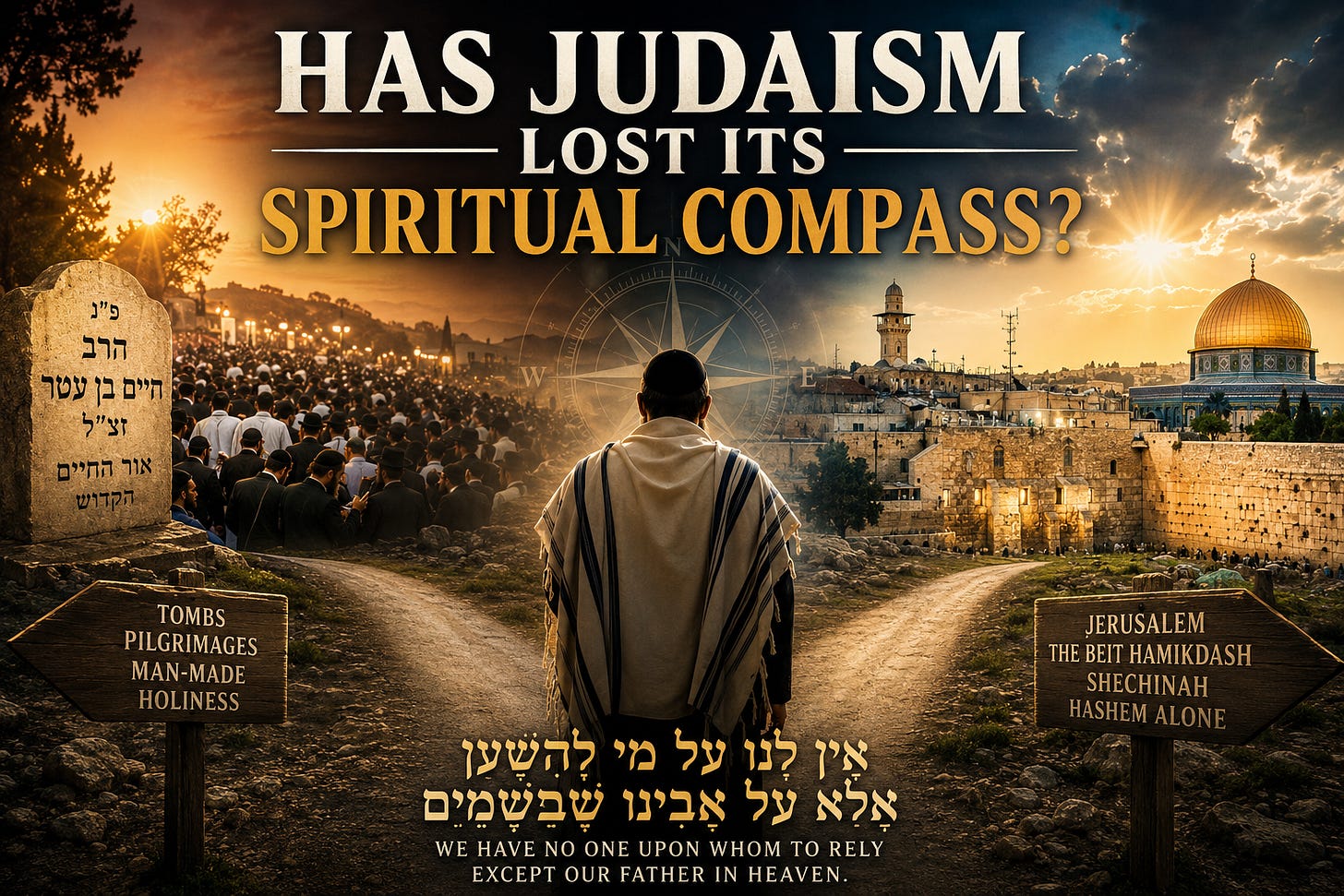
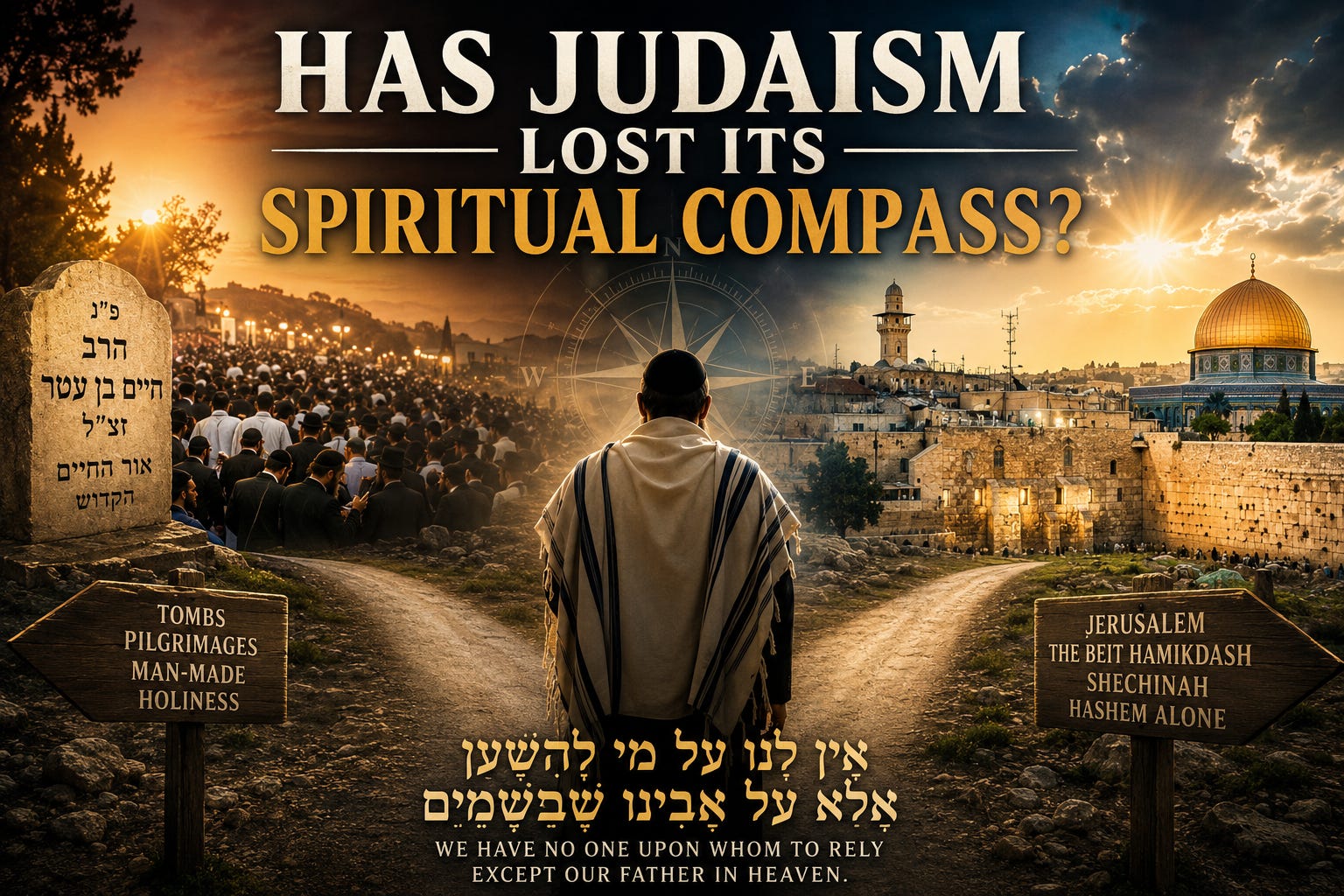
Today is the yahrtzeit of the holy Ohr HaChaim, whose resting place on Har HaZeitim attracts the largest annual gathering on our mountain. It is estimated that nearly 100,000 people visit his kever during the twenty-four hours surrounding his yahrtzeit. The Ohr HaChaim was undoubtedly one of the greatest Torah giants in our history, and the respect shown to his memory is understandable. But what I witnessed today should disturb every Jew who takes the Torah seriously.
Standing across the valley, countless worshippers faced eastward toward the grave of the tzaddik while turning their backs to the eastern wall of the Temple Mount. The verse that immediately echoed in my mind was the prophet’s rebuke in Yechezkel 8:16: “אֲחֹרֵיהֶם אֶל הֵיכַל ה’ וּפְנֵיהֶם קֵדְמָה וְהֵמָּה מִשְׁתַּחֲוִיתֶם קֵדְמָה לַשָּׁמֶשׁ.” Their backs were toward the Temple of Hashem, their faces toward the east, and they were bowing eastward to the sun.
I am not suggesting, God forbid, that these Jews are worshipping the sun. Nor do I question their sincerity. But symbolism matters. Orientation matters. Torah teaches that all prayer is directed toward the Makom HaMikdash, the place where the Divine Presence rests. The Gemara in Berakhot 30a teaches that Jews everywhere turn their hearts toward Jerusalem, and those in Jerusalem direct themselves toward the site of the Beit HaMikdash. Likewise, Pirkei De-Rabbi Eliezer 35 describes the Temple Mount as Sha’ar HaShamayim, the gateway through which our prayers ascend to Heaven. How tragic, then, that so many Jews unknowingly turn their backs on that very place while directing their prayers toward a grave.
The issue extends far beyond one yahrtzeit. Over the past generations, we have witnessed the steady growth of practices that sometimes blur the distinction between honoring great tzaddikim and treating them as intermediaries. Pilgrimages to graves, the belief that one must pray at a particular tomb to be heard, the assumption that spiritual power resides in locations outside the place chosen by Hashem Himself—these ideas have increasingly displaced the Torah’s clear emphasis on Jerusalem and the Beit HaMikdash.
This same mindset explains why thousands of Jews believe they must travel to Uman, to the Ohel of the Rebbe in New York, to the kever of the Ribnitzer Rebbe in Monsey, or to the many revered gravesites throughout Morocco to pour out their hearts in prayer. Visiting the resting places of righteous individuals can certainly inspire reflection, repentance, and a deeper connection to our heritage. Chazal recognized that such visits can awaken a person’s heart. But nowhere do they teach that these places replace Jerusalem as the focal point of Jewish prayer.
In fact, the Rambam takes an even more striking approach. In Mishneh Torah, Hilchot Avel 4:4, he writes: “וְאֵין מְקִימִין נֶפֶשׁ לַצַּדִּיקִים, דִּבְרֵיהֶם הֵם זִכְרוֹנָם; וְלֹא יִפְנֶה אָדָם לְבַקֵּר הַקְּבָרוֹת.” The Rambam reminds us that the greatest memorial to a tzaddik is not his monument or even his gravesite, but his Torah. “דבריהם הם זכרונם”—their teachings are their remembrance. The highest honor we can give the Ohr HaChaim is to study his words, follow his example, and direct our prayers where the Torah itself directs them: toward the Makom HaMikdash, the place chosen by Hashem as Sha’ar HaShamayim.
Our generation has been privileged to witness the return of the Jewish people to Eretz Yisrael after nearly two thousand years of exile. We have been brought back to the city that Hashem chose from all the tribes of Israel, the place where every Jew throughout history turned three times a day in prayer. Yet many continue to orient their spiritual lives as though we were still scattered in exile, searching for holiness everywhere except the place where Hashem Himself declared His Name would dwell.
This concern is not merely about the direction in which we stand during prayer. It is about where our hearts are directed. The Chassam Sofer, at the conclusion of Toras Moshe on Parshas Emor, teaches that every Jew must possess קנאת ירושלים—a burning zeal for Jerusalem. Jerusalem is not simply another holy place among many. It is the singular city chosen by Hashem for His Presence. The Beit HaMikdash is the place toward which all Jewish prayer is directed and from which the Divine Presence radiates to the world. The Chassam Sofer’s message is that a Jew’s deepest spiritual longing should be for Jerusalem itself.
That perspective forces us to examine our own priorities. There is certainly room within our tradition to honor great tzaddikim and to be inspired by places associated with them. But if our greatest excitement, our strongest emotional attachment, and our largest gatherings revolve around places other than Jerusalem and the Makom HaMikdash, then something in our spiritual compass has shifted. The Torah’s center has not changed. The Shechinah has not moved. Our yearning must always return to the place that Hashem Himself chose. This is not merely a geographical mistake; it is a theological one. The Torah repeatedly warns us against allowing religious emotion to drift away from the institutions and places established by Hashem. Even when motivated by sincere devotion, replacing what God commanded with what feels spiritually meaningful has always been a danger for the Jewish people. Throughout Tanach, idolatry rarely began with an outright rejection of Hashem. More often, it emerged gradually as people redirected religious devotion toward objects, people, or locations that were never intended to become the center of their service.
We should certainly honor our tzaddikim. We should study their Torah, emulate their character, and preserve their memory with the greatest respect. But they themselves pointed us toward Hashem, not toward themselves. The greatest tribute we can offer the Ohr HaChaim, or any of our righteous leaders, is to strengthen our connection to the place where the Shechinah rests and where all Jewish prayer has always been directed.
The question each of us must honestly ask is this: If the Chassam Sofer were alive today, where would he tell us to direct our longing? To Uman? To Meron? To Monsey? To Morocco? To New York? Or would he remind us that our greatest yearning belongs to Jerusalem?
After all, Chazal taught us that the Temple Mount is Sha’ar HaShamayim, the Gateway to Heaven. The Gemara instructed every Jew to direct his prayers toward the Makom HaMikdash. The Rambam reminded us that “דבריהם הם זכרונם” and that our focus should not become centered on graves. The Chassam Sofer urged us to cultivate קנאת ירושלים. Remarkably, all of these voices—from Tanach, Chazal, the Rambam, and the Chassam Sofer—point in exactly the same direction. Perhaps the tragedy of our generation is not that we have stopped searching for holiness. It is that we have forgotten where the Torah tells us to look. Our tzaddikim never sought to replace the Ribbono Shel Olam. They sought to bring us closer to Him. They never intended to become the destination; they wanted to be the guides pointing us toward the One to Whom every tefillah is directed. As we await the rebuilding of the Beit HaMikdash and the full revelation of the Shechinah in Jerusalem, may we restore our spiritual compass and remember the timeless words of Chazal: אֵין לָנוּ עַל מִי לְהִשָּׁעֵן אֶלָּא עַל אָבִינוּ שֶׁבַּשָּׁמָיִם. We have no one upon whom to rely except our Father in Heaven.