
By Rabbi Josh Wander
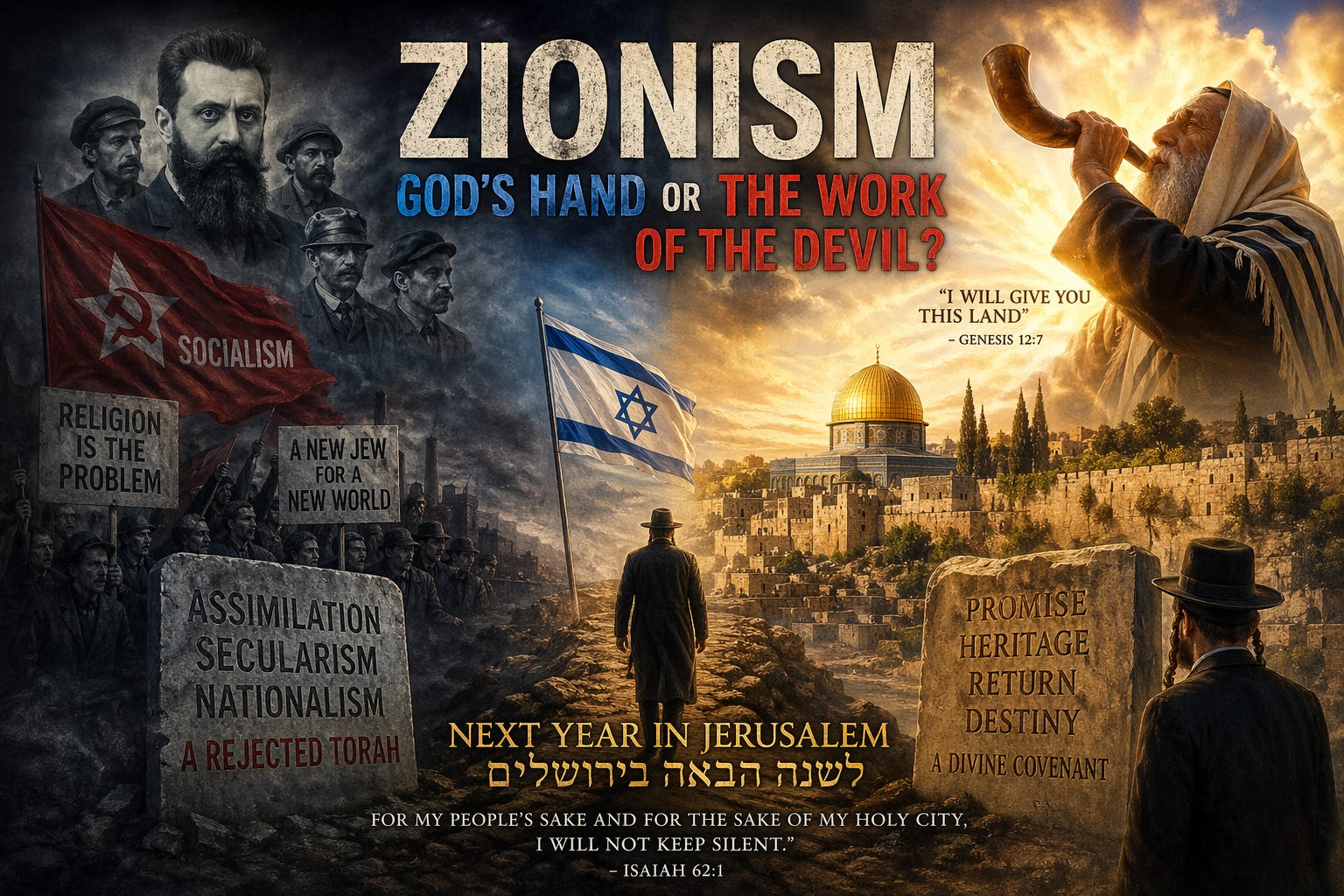
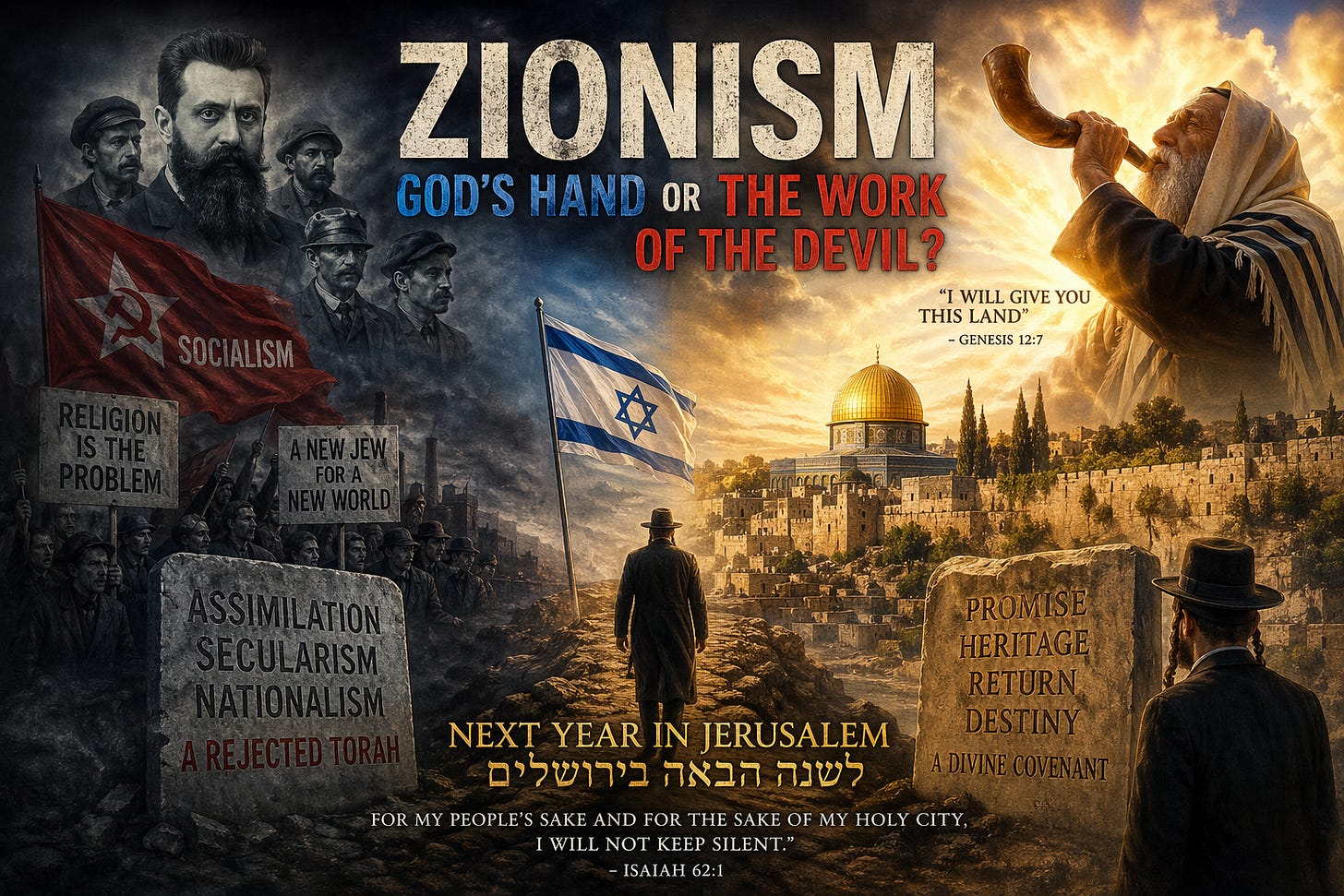
There are few words in modern Jewish discourse more loaded, more misunderstood, and more explosively divisive than “Zionism.” It is a term so distorted by history, ideology, and emotion that two religious Jews can argue passionately about it for hours without ever realizing that they are speaking about two entirely different concepts. Each is convinced the other is blind, when in truth they are not even looking at the same thing. This is the elephant in the room, especially on Yom Ha’atzmaut—a day that forces the question whether what we are witnessing is a rebellion against God or the unfolding of His will.
From one perspective, the critique is not only understandable but historically grounded. What is commonly labeled “Zionism” emerged in the late 19th and early 20th centuries as a political movement led largely by secular, even anti-religious Jews. Many of its architects did not merely seek refuge from persecution; they envisioned a redefinition of Jewish identity detached from Torah, replacing covenant with culture and mitzvot with nationalism. For those steeped in traditional Torah values, this was not redemption—it was rebellion. In that sense, calling it dangerous or even spiritually corrosive is not an exaggeration. It would be like mistaking “kosher style” for kosher, or equating belief in Mashiach with the theology of so-called “Messianic Jews.” The terminology overlaps, but the substance could not be more different.
And yet, there is another Zionism—older, deeper, and impossible to erase. Long before it was co-opted by political ideologues, Zionism was a promise. It began when Hashem commanded Abraham to leave everything familiar and journey to a land that would become the eternal inheritance of his descendants. From that moment forward, Jewish history became a story of attachment to that land, even in absence. Through exile after exile—Babylon, Rome, Spain, Eastern Europe, and ultimately the inferno of the The Holocaust—the Jewish people never let go of that vision. “Next year in Jerusalem” was not poetry; it was a declaration of identity. Facing Jerusalem in prayer was not ritual; it was orientation toward destiny.
So how can both perspectives feel so compelling, so “right”? The answer lies in a single, uncomfortable idea: the possibility that redemption does not unfold the way people expect it to. There is a deeply ingrained assumption in parts of the religious world that Geula must arrive as a fully formed, unmistakably divine event—a supernatural rupture in history that leaves no room for ambiguity. Anything less is dismissed as illusion. היינו כחולמים—“we were like dreamers”—is interpreted not as a description of the experience, but as a reason to deny it altogether. If it feels surreal, it must not be real.
But Jewish history does not support that expectation. Again and again, Hashem’s hand has revealed itself דווקא בתוך הטבע—within the natural flow of events, cloaked in politics, personalities, and processes that seem anything but holy. The return from Babylon was sanctioned by a Persian king. The Purim story unfolded through palace intrigue and political maneuvering. The unfolding of redemption has never been as clean or as comfortable as people would like it to be. It is messy, disorienting, and often led by figures who would not be invited to speak in a yeshiva.
And that is precisely the challenge. How can it be that generations of towering tzaddikim did not merit to see what we are witnessing, while a group of secular pioneers—many openly dismissive of Torah—became the agents through which Jewish sovereignty returned to the Land? It feels backwards, almost offensive to our sense of spiritual order. And so, many choose the safer path: to deny that anything significant is happening at all, to reinterpret reality in a way that preserves theological comfort.
But reality has a way of refusing to cooperate with denial. After nearly eight decades, the original ideological dream of those secular socialists has largely evaporated. The attempt to create a “new Jew” severed from his past has not endured. Instead, something far more ancient and far more powerful has reasserted itself. Torah is flourishing in the Land in ways unimaginable a century ago. Millions of Jews live in Eretz Yisrael, speak its language, walk its soil, and are bound to its destiny whether they acknowledge it or not. The state that was meant to replace tradition has, in many ways, become a vessel through which that very tradition is reawakening.
So is Zionism the work of the devil or the hand of God? The honest answer is that it depends on what one means by the word. If Zionism is defined as a human attempt to uproot Torah and redefine Judaism, then the criticism stands. But if Zionism is understood as the unfolding realization of a divine promise, then rejecting it outright may mean rejecting the very process that generations prayed to witness.
The uncomfortable possibility is that both sides have been right—and incomplete. Like the rabbi in Fiddler on the Roof who affirms opposing arguments, the truth here is not found in choosing one side and dismissing the other, but in recognizing that history is more complex than ideology. What began as a movement with deeply problematic elements may, in the hands of Hashem, have become something far greater than its founders ever intended.
The real question is no longer theoretical. It is not about defining Zionism in a vacuum, but about recognizing what is unfolding in front of our eyes. At a certain point, denying reality requires more faith than accepting it. And if this is, in fact, the early stages of Geula, then the implications are enormous—not just for how we think, but for how we act.
Time will reveal what people refuse to see. But one thing is becoming increasingly difficult to ignore: the human dream that sought to reshape Judaism has faded, while the ancient promise that sustained it for millennia is coming back to life.
חג העצמאות שמח.