
By Rabbi Josh Wander
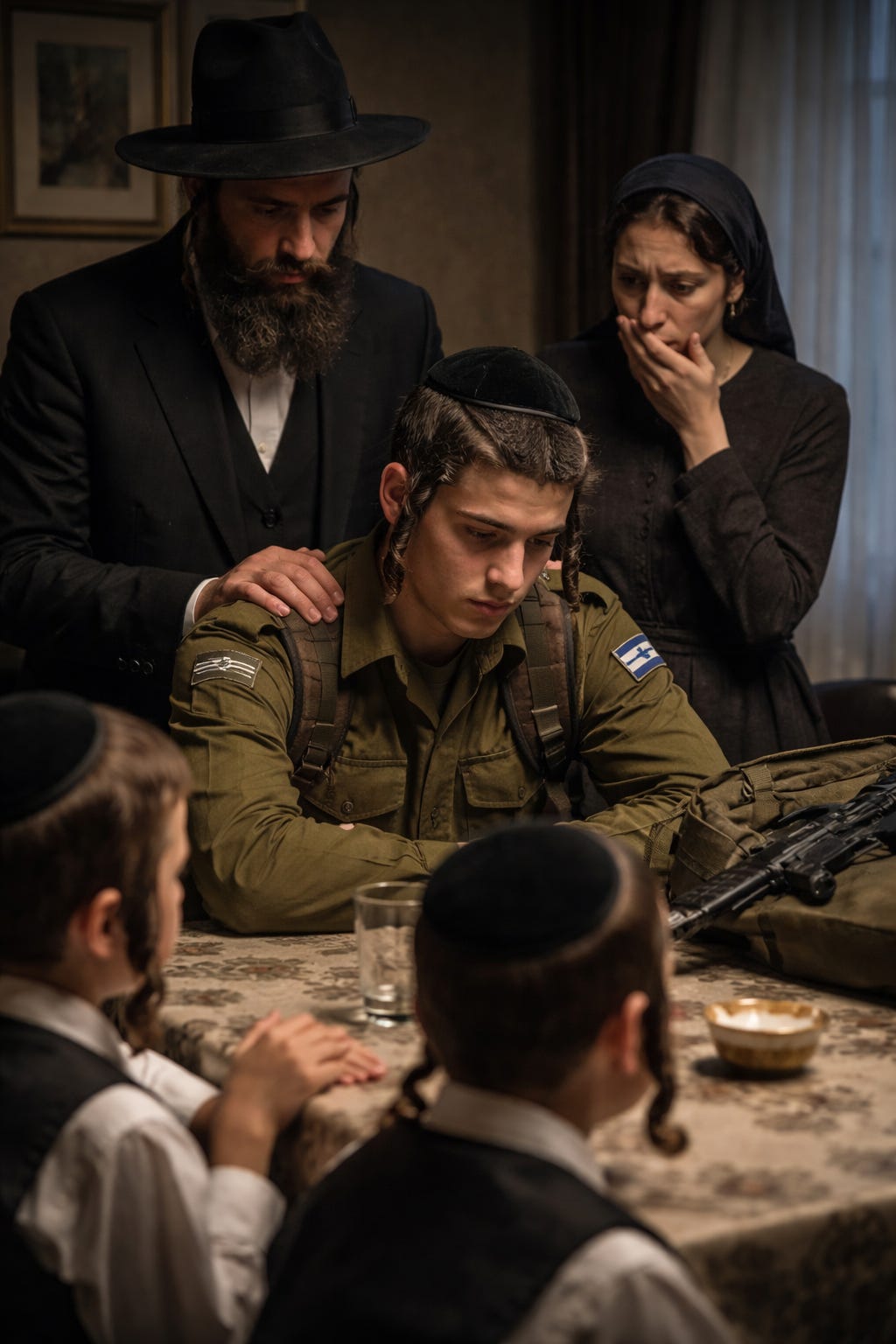
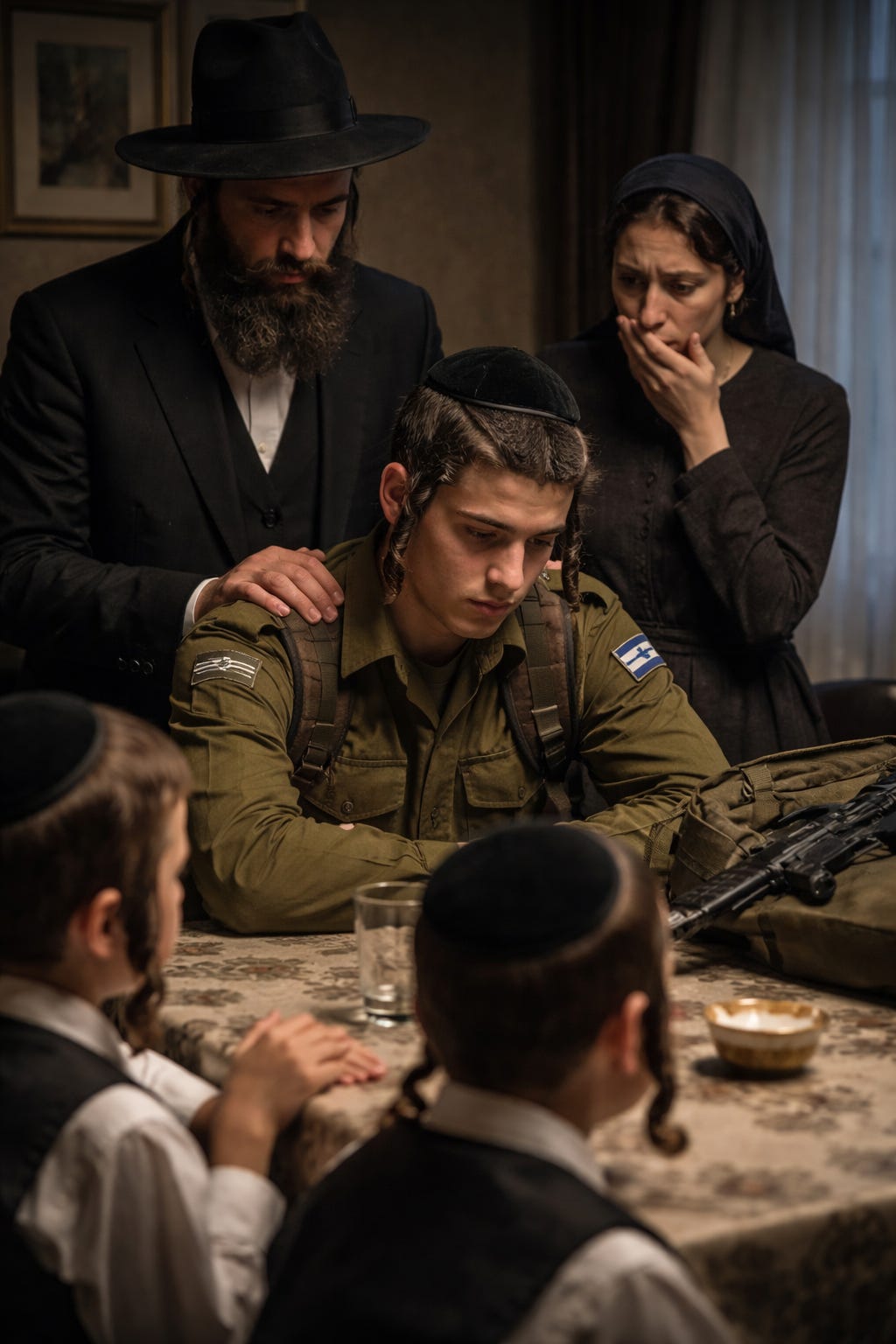
There is a very specific fear that lives in many Orthodox homes in America. It is not abstract. It has a face. It has peyos. It is your seventeen-year-old son.
Make Aliyah? And send him to the Israel Defense Forces?
For many fathers and mothers, that’s the brick wall. They can discuss housing. They can debate parnassah. They can even tolerate cultural adjustment. But the thought of their boys in uniform—risking their lives in a Jewish army—stops the conversation cold.
Let’s not pretend this is trivial. A son is not an ideological talking point. He is a neshama. He is your future. Fear here is not weakness. It’s love.
But now let’s step back and look at the full chessboard.
The assumption beneath the fear is this: “If we stay in America, our sons will be safe from military conscription.” That assumption rests on a very particular version of the future—one where the United States never again requires a draft.
History does not support that confidence.
The draft has been used repeatedly in American history—World War I, World War II, Korea, Vietnam. The Selective Service system still exists. It is dormant, not dead. If a large-scale global conflict erupts—call it World War III, call it great-power escalation, call it whatever you like—and the United States Armed Forces find themselves stretched across multiple theaters, manpower becomes arithmetic, not philosophy.
In that moment, Orthodox boys in Brooklyn or Lakewood are not outside the equation.
The irony is sharp. Families who refuse Aliyah because they do not want their sons drafted into the IDF may one day see those same sons drafted into the U.S. military instead. Only this time, it will not be to defend Yerushalayim or the Galil. It will be to serve American strategic interests—perhaps in Eastern Europe, perhaps in the Pacific, perhaps somewhere no one today is even discussing.
This is not prophecy. It is a working theory grounded in how nation-states behave under existential stress. Democracies are gentle—until they are not.
And here is the deeper discomfort: when your son serves in the IDF, he is part of the story of Jewish sovereignty. He stands in a chain that stretches from Yehoshua bin Nun to modern Israel. He defends Jewish lives in a Jewish land.
When he is drafted into a foreign army, however honorable that army may be, he becomes part of someone else’s national narrative.
Many American Orthodox Jews have grown accustomed to unprecedented stability. The post-World War II era has been a golden age of comfort and upward mobility. But history is not linear. It lurches. It convulses. It surprises the confident.
The same communities that worry about campus antisemitism and rising hostility often simultaneously assume that America will remain permanently immune to the kinds of pressures that historically produce conscription and border closures.
That assumption deserves scrutiny.
If global conflict expands rapidly, borders can close overnight. Emigration becomes difficult. Governments prioritize internal control. Movement is restricted. That is not dystopian fiction; it is standard wartime policy.
So the real comparison is not “IDF service versus no service.” It may be “IDF service in defense of the Jewish homeland” versus “mandatory service in defense of a superpower’s global posture.”
Neither option is risk-free. Pretending otherwise is intellectual laziness.
The question every father must eventually confront is not merely: “How do I protect my son from danger?” That instinct is primal and holy. The harder question is: “In which national story do I want my son standing when history becomes unstable?”
Avoiding Aliyah out of fear of the draft only works if you assume that America will never draft again, never close borders, never enter large-scale war. That is a very confident bet in a very uncertain century.
The world is shifting. Power blocs are realigning. Military budgets are expanding globally. Stability is thinner than it appears.
Your son will grow up in whatever world emerges from that turbulence. The only variable you meaningfully control is which flag defines the meaning of his sacrifice, should sacrifice ever be required.
History has never guaranteed Jewish safety in exile. Sovereignty was meant to change that equation. Fear is understandable. But fear should at least be aimed at the full map, not just the piece of it that feels most immediate.