
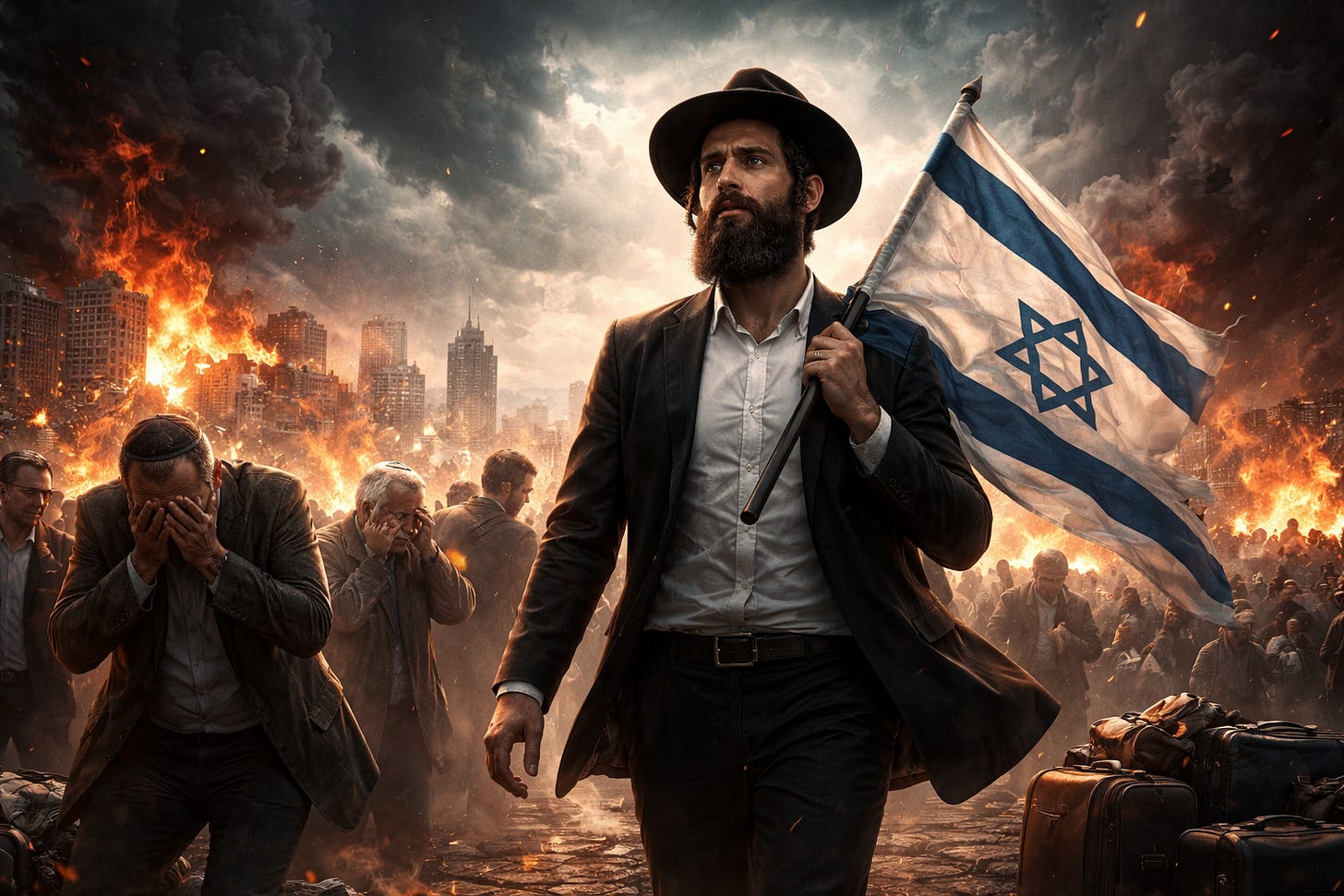
By Rabbi Josh Wander
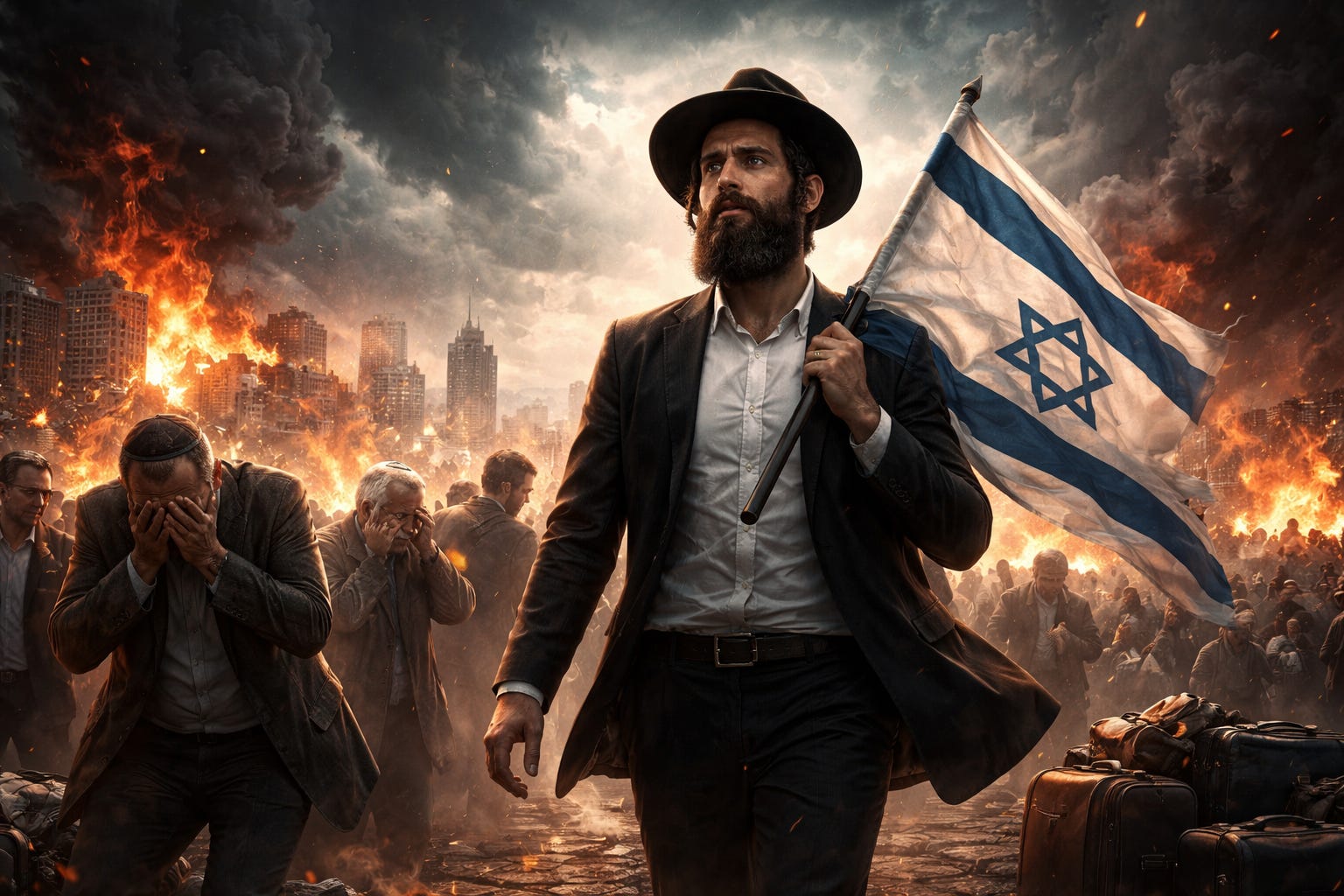
Truth is a funny thing.
People claim to want it the way people claim they want to eat healthy or exercise. It sounds noble. It photographs well. It looks great on a T-shirt.
But when the truth actually shows up at the door—muddy boots, cold eyes, demanding change—suddenly nobody’s home.
Most people are not truth seekers. They are comfort seekers.
Truth disrupts. Comfort anesthetizes.
Truth says: Move.
Comfort says: Sit, you’re fine.
And nine out of ten times, we choose the couch.
Human beings have a built-in psychological trick called normalcy bias. It’s the mental voice that whispers, “Relax, things will work out,” while the smoke alarm is screaming and the curtains are already on fire. It’s the same instinct that keeps people standing on the deck of a tilting ship insisting, “It’s probably just a wave.”
History is basically a graveyard of people who trusted that voice.
Cities burn. Empires collapse. Communities get expelled, looted, deported. And every single time—every single time—most people say, “It won’t happen here.”
Until it does.
Rabbi Meir Kahane once titled a book Uncomfortable Questions for Comfortable Jews. The title alone is enough to make people nervous. Not because the questions are wrong, but because they are dangerous. Dangerous to routine. Dangerous to illusions. Dangerous to the tidy little life we’ve arranged for ourselves in exile.
Exile is cozy. That’s its genius.
It gives you just enough stability to forget you’re temporary. Just enough success to forget you’re vulnerable. Just enough freedom to forget you’re tolerated.
Galus isn’t chains and dungeons anymore. It’s mortgages and PTA meetings. It’s Costco memberships and good schools. It’s “things are fine.”
Which makes it far more effective.
Because when life is comfortable, nobody wants to hear that the building is structurally unsound.
You tell someone, “This place isn’t safe. You need to leave. You need to change everything. Your assumptions are wrong. Your future isn’t here,” and they don’t thank you.
They call you paranoid.
Extremist.
Fear monger.
Fanatic.
Translation: Please stop making me uncomfortable.
There’s another trick the mind plays: the illusion of time.
We walk around as if we signed a contract with eternity.
“I’ll deal with it next year.”
“After the kids grow up.”
“When things calm down.”
“When Moshiach comes.”
As if tomorrow is guaranteed. As if history hasn’t repeatedly demonstrated that tomorrow sometimes arrives with sirens and soldiers.
Procrastination is the most socially acceptable form of self-deception.
It feels productive. It feels rational. It feels calm.
It’s also how people end up trapped in burning buildings.
Every galus ends the same way. Not differently. Not creatively. The details change; the outcome doesn’t.
Security turns into hostility.
Neighbors turn into accusers.
Normal life collapses faster than anyone thought possible.
And afterward everyone says the same sentence:
“We didn’t see it coming.”
Which is absurd.
There were always signs.
There are always signs.
There are always a few people reading the writing on the wall, tracing the cracks in the foundation, connecting the dots. And those people are mocked right up until the moment they’re proven right.
Then suddenly they’re called “visionaries.”
Funny how that works.
Right now we are living in one of the strangest moments in Jewish history. Something that never existed before.
Half the Jewish people are already home.
Home. Not theory. Not dream. Not prophecy in a sefer. Reality.
A sovereign Jewish state. An army. Cities. Farms. Torah institutions. A living, breathing national revival.
For the first time in two thousand years, the door is open.
And half of our people are still standing outside arguing about whether they should knock.
Half see the danger signs flashing red across the Diaspora. Rising antisemitism. Economic instability. Political fragility. Social chaos.
Half say, “It’ll pass.”
Half are packing their bags.
Half are rearranging the furniture.
It’s surreal.
Imagine Noah building the ark while his neighbors are debating curtain colors.
The boat isn’t gently rocking anymore. It’s taking on water.
But people would rather debate theology, sociology, or real estate prices than confront the obvious conclusion that truth demands change.
Because truth is expensive.
Truth might require you to move.
To uproot.
To sacrifice.
To admit you were wrong.
To abandon a comfortable life and step into uncertainty.
And that’s terrifying.
So we invent excuses.
Daas Torah.
Parnassa.
Schools.
Community.
“It’s not the right time.”
“Things are good here.”
Excuses are cheap. Reality is not.
Here’s the blunt, uncomfortable truth:
Most people don’t reject truth because they think it’s false.
They reject it because they sense it might be true.
And if it’s true, they’d have to act.
And acting hurts.
So they plug their ears and say, “You can’t handle the truth.”
But the truth doesn’t disappear just because you refuse to handle it.
Gravity still works whether you believe in it or not.
History still moves whether you’re ready or not.
Hashem’s plan still unfolds whether you cooperate or not.
The only real choice is whether you walk toward reality with your eyes open… or get dragged there kicking and screaming.
Every generation has a handful of people who see what’s coming and move early. They look crazy—until they look brilliant.
They aren’t prophets. They’re just paying attention.
They don’t have special powers. They simply refuse the narcotic of comfort.
They choose truth over ease.
And in the long run, truth always wins.
It just tends to be merciless with those who tried to ignore it.
The universe has a strange sense of humor: eventually, everyone handles the truth.
Some handle it calmly and voluntarily.
Others handle it when the walls collapse.
History suggests the first option is much less painful.